
Metal Bellows Expansion Joint technical overview.
Metal Bellows Expansion Joint from JINYI is specified by its application, material and connection or drawing requirements. Review the selection schedule and enquiry requirements below to prepare a quotation for your project.
On this page
Specification basis: The schedule below distinguishes industry geometry from order-specific requirements. Final dimensions, performance and price are defined in the approved quotation and drawing. Photographs identify the product family.
What is a metal bellows expansion joint?
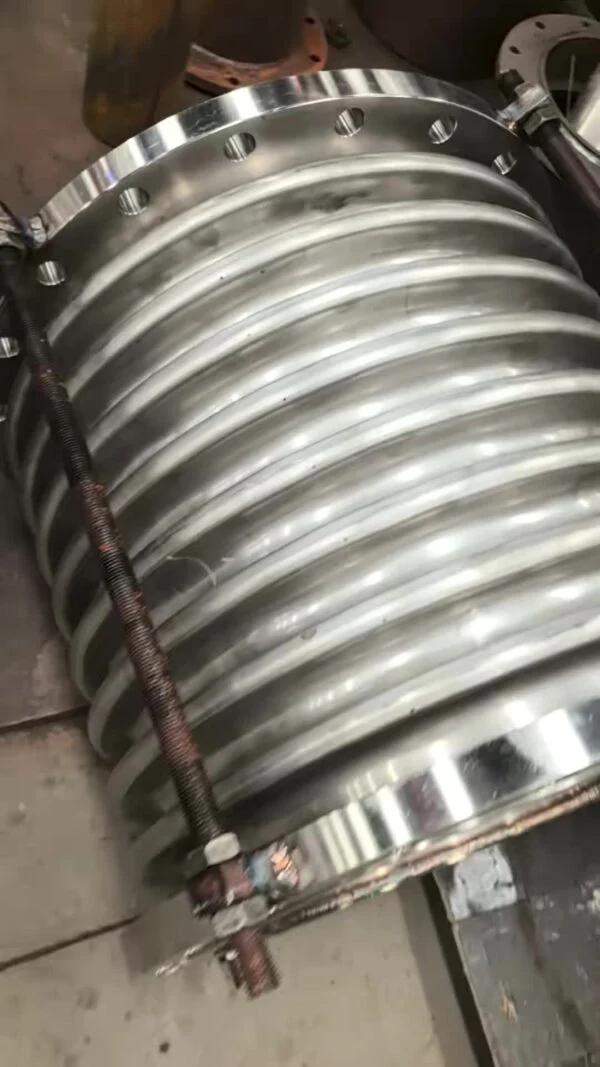
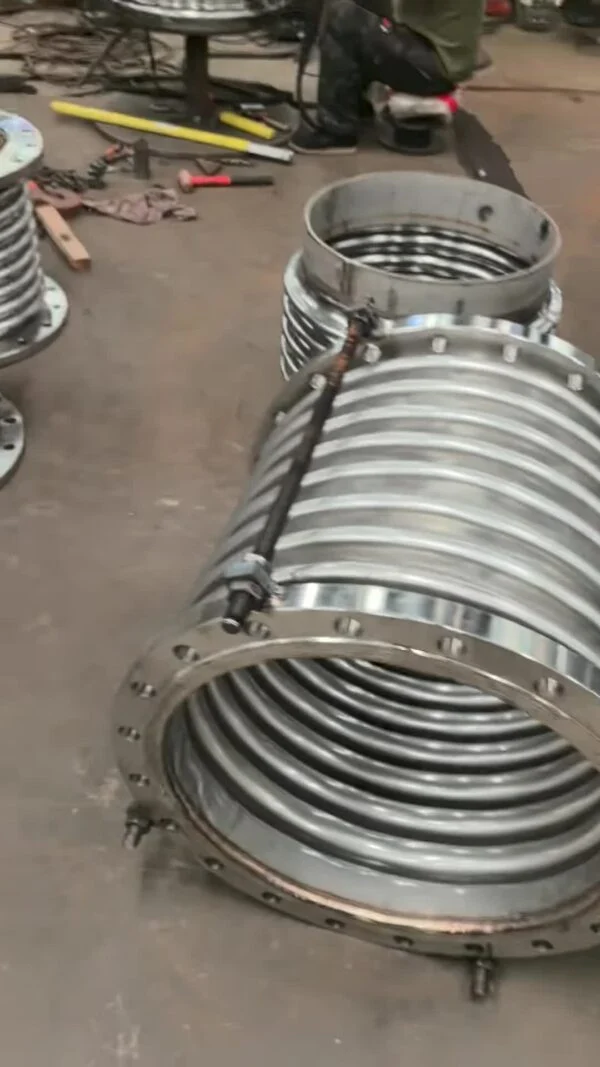
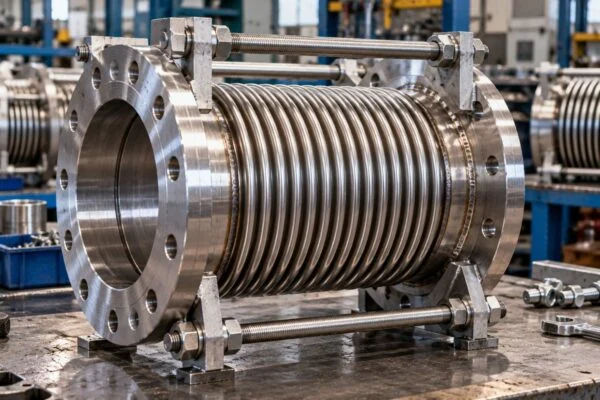
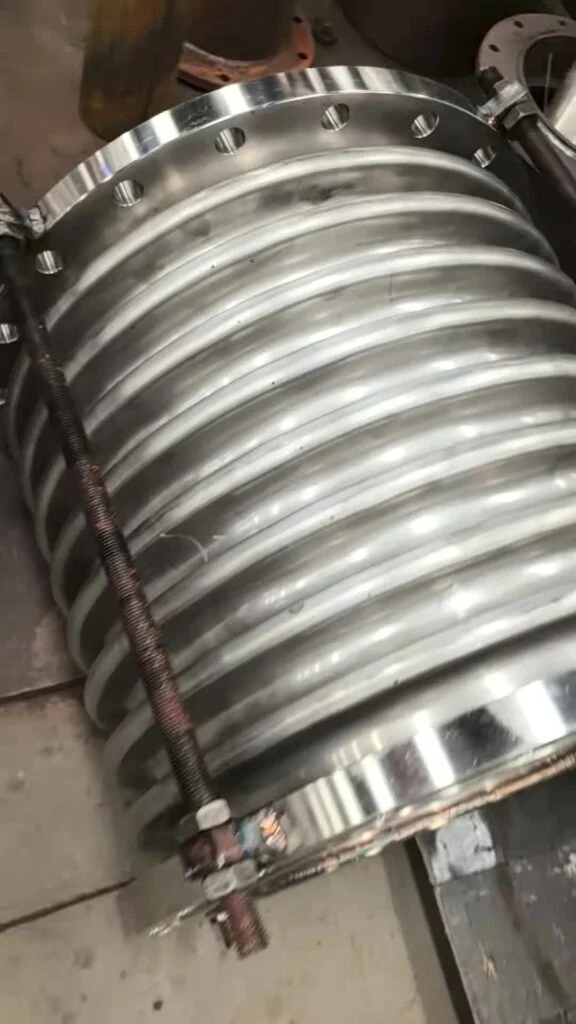
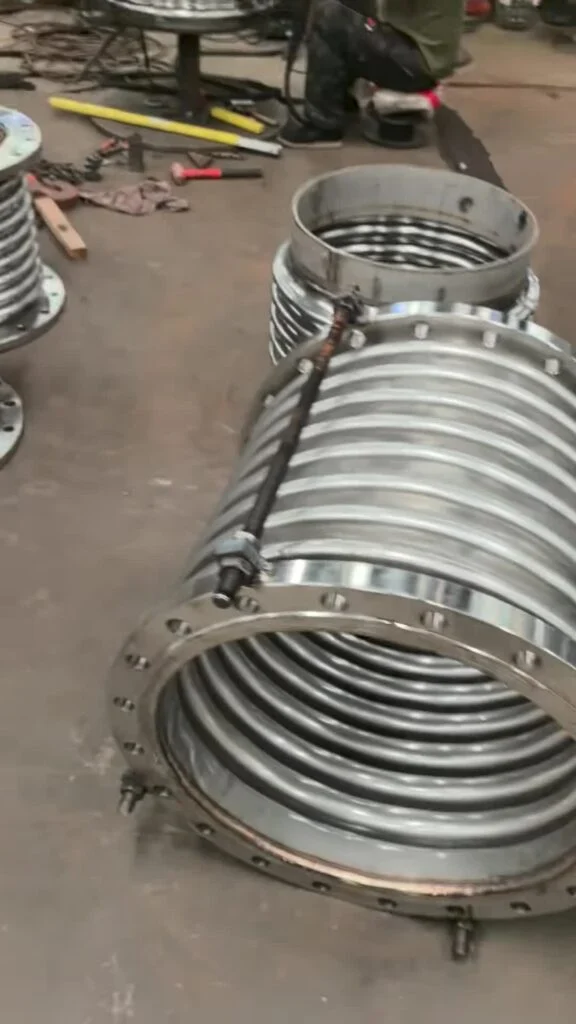
A metal bellows expansion joint uses a corrugated metallic element and end connections to accommodate specified piping movement. The illustrated assembly has flanges and threaded rods; the rod arrangement and permitted movements must be defined by the actual design.
Key dimensions and installation fit
Select a bellows joint by pressure, temperature, medium, movement combination and cycle life together. Flange drilling such as PN16 does not by itself establish the joint’s working pressure. Spring rate, effective area, movement and installed length belong to the selected design and must not be copied from another model. Compare related configurations: rubber expansion joint, weld neck flange.
How to specify the metal bellows expansion joint
State axial, lateral and angular movements separately, with their simultaneous combinations, cycle requirements, pressure and temperature. Identify whether rods act as tie rods, limit rods or transport restraints. A restrained configuration must not be assumed to permit unrestricted axial travel.
Select the joint by pressure, temperature, material, movement direction and required cycle life together. Axial, lateral and angular movements interact and cannot be assumed to occur at their individual maxima simultaneously. Main anchors, guides and pressure-thrust restraint are part of the piping design.
Technical data for the metal bellows expansion joint
| Component | Metal bellows expansion joint |
|---|---|
| Nominal size and ends | Specify DN/NPS, flange standard or weld-end geometry |
| Design conditions | Pressure, temperature and process medium together |
| Movement | Axial, lateral and angular demands and combinations |
| Cycle requirement | Required cycles and operating movement range |
| Bellows material | Grade, construction and compatibility to design |
| Installed length | Face-to-face dimension and preset to approved drawing |
| Restraint arrangement | Define tie rods, limit rods, hinges or other restraints |
| Reaction loads | Spring reactions and pressure thrust to selected unit data |
| Installation | Anchors, guides, alignment and torsion control |
Sizes and dimensional requirements
Use the named standard for standardized interfaces and the controlled drawing for custom dimensions. Confirm units, diameter datums, minimum finished thickness and any mating-component requirements. A catalogue dimension is not a universal tolerance, capacity or pressure rating.
Dimensions and tolerance schedule
| Individually toleranced features | Limits and datum system on the approved drawing |
|---|---|
| General tolerances | Standard, edition and class apply only when specified |
| Bellows acceptance | Movement, cycle life, pressure and leak-test scope to selected design |
Movement is a functional limit of the referenced bellows design, not a fabrication tolerance. The actual assembly requires an approved movement schedule, dimensional drawing and pressure-temperature basis.
Materials, inspection and documentation
Verify the approved movement and pressure-temperature data, face-to-face length, flange drilling and installation preset. Inspect the bellows for handling damage and keep welding or grinding debris away from convolutions. Confirm flow-liner orientation, guide locations and transport restraint removal with the installation procedure.
State the exact material designation and supplied condition, the controlled drawing revision and the required inspection reports before ordering. Separate material certification from dimensional checks and functional or pressure testing. Agree the acceptance limits for the ordered component and identify any additional witnessing, marking or packing requirements. Review connector and flexible-joint manufacturing when defining the production and acceptance scope.
Installation and handling guidance
Install at the specified face-to-face length and orientation, with the required anchors and guides already identified in the piping design. Protect the bellows from weld spatter and handling damage. Avoid torsion and do not use the joint to pull misaligned pipework together.
Where the metal bellows expansion joint is used
- Thermal movement. Project-selected joints for the stated movement and operating cycle.
- Equipment connections. Movement management with the appropriate anchors and guides.
- Industrial piping. Documented metal bellows assemblies matched to the service conditions.
How to order a metal bellows expansion joint
Send the required configuration, material, quantity, destination and controlled drawing to JINYI. Identify changed dimensions, mating components, operating conditions and inspection scope. For a repeat order, include the previous approved revision and state any changes. The final quotation defines the supplied geometry, documentation, price and delivery terms.
Quantity prices and order preparation
| 1–9 pcs | US$200.30 / piece |
|---|---|
| 10–49 pcs | US$200.30 / piece |
| 50+ pcs | US$200.30 / piece |
Indicative budget pricing selected from public supplier listings. Selected upper amount from the US$8–200.30 stainless metal-bellows family listing with a five-piece supplier minimum. Size, pressure, movement and cycle life require quotation. Huayuan metal bellows catalogue. Final JINYI pricing depends on the confirmed specification, quantity, inspection and delivery scope. Quantity-specific terms are confirmed with the final quotation.
Engineering and pricing references
NieRuf axial expansion joint selection data. These sources explain the named product geometry or selection method. Their certifications, rated capacities and manufacturing capabilities belong to the named organizations.
Other JINYI products worth comparing
Review the rubber joints and metal compensators catalog for adjoining components, connection choices and alternative product forms.
Request a metal bellows expansion joint quotation from JINYI with the drawing, material and quantity required for your project.
Metal Bellows Expansion Joint selection and quotation checklist
The metal bellows has a different movement and spring behaviour from an elastomer joint. Provide the movement combinations, service conditions and anchor arrangement for engineering selection. Use the photographed product form to identify the arrangement, then use the controlled drawing to define what will be supplied. Similar-looking components can have different end details, load paths or maintenance requirements.
Metal Bellows Expansion Joint dimensions and tolerances
The first comparison for this metal bellows expansion joint is axial movement and spring force. Mark the dimensions that control mating, alignment and installation space on the enquiry drawing. Give units for every value and identify the datum from which it is measured. If a dimension is critical, specify its individual tolerance and measurement method rather than relying on a general tolerance note.
Select a bellows joint by pressure, temperature, medium, movement combination and cycle life together. Flange drilling such as PN16 does not by itself establish the joint’s working pressure. Spring rate, effective area, movement and installed length belong to the selected design and must not be copied from another model. Review the selection schedule together with the final drawing and inspection requirements.
Prepare the material and interface information
For a metal bellows expansion joint enquiry, identify the required material designation and supplied condition. Describe the mating components, attachment method and environment. Include the operating temperature and any relevant pressure, movement or structural load. These inputs should describe the actual installation, including changes between normal operation, start-up and maintenance where applicable.
Specify coatings, surface finish and marking separately from the base material. If traceability is needed, identify the record required and how it must correspond to the delivered component. Agree whether inspection covers dimensions, material documentation, welds or functional testing; these are different checks with different acceptance criteria.
Custom metal bellows expansion joint quotation
Attach the latest drawing revision, required quantity and delivery destination when contacting JINYI. Highlight departures from the illustrated arrangement, including changed dimensions, connections, finish and packing. For repeat orders, reference the approved configuration and list changes explicitly so an earlier drawing is not assumed to remain current.
Compare quotations using the same geometry, grade, supplied condition, unit of supply and inspection scope. A piece, a segment and a complete assembly can represent different quantities. Confirm quantity discounts and delivery terms with the final quotation.
Compare related component arrangements
Evaluate this bellows joint by its actual axial movement and spring force and the required expansion joint arrangement. The photographs below show separate JINYI products for comparison. They are linked to their own technical pages and are not additional gallery views of this metal bellows expansion joint.
| Photo | Related product | Selection detail |
|---|---|---|
 | Rubber Expansion Joint | Movement limits and face-to-face length. Compare this separate product when the drawing requires its particular arrangement. |
 | Weld Neck Flange | Hub geometry and pipe bore. Compare this separate product when the drawing requires its particular arrangement. |
 | Slip On Flange | Bore clearance and hub height. Compare this separate product when the drawing requires its particular arrangement. |
Questions to resolve before ordering
Which dimensions need checking first?
Start with axial movement and spring force and the mating or mounting detail. Check nominal designations against measured dimensions, then review the installation envelope. Photographs help identify the form; the drawing provides the dimensional basis for acceptance.
What should the quotation include?
A metal bellows expansion joint quotation should identify the configuration, drawing revision, material, quantity, price basis and agreed inspection records. Keep these details together with the approved order so receiving inspection can compare the delivered product with the specified component.
Independent terminology reference
Roth expansion joint product families provides an independent reference for component terminology. Use the specified standard and edition where required by the project. This link does not establish JINYI certification, product approval or interchangeability with another manufacturer.
- Spec
- Defined configuration
- Grade
- Material requirement
- US$200.30
- Indicative unit price
- 3
- Quantity bands
- Product arrangement — Metal bellows · movement and pressure to datasheet
- Engineering selection — Select a bellows joint by pressure, temperature, medium, movement combination and cycle life together. Flange drilling such as PN16 does not by itself establish the joint’s working pressure. Spring rate, effective area, movement and installed length belong to the selected design and must not be copied from another model.
- Quotation scope — Material, drawing revision, quantity, inspection and delivery terms confirmed together
At a glance
- Product form
- Metal bellows · movement and pressure to datasheet
- Component
- Metal bellows expansion joint
- Nominal size and ends
- Specify DN/NPS, flange standard or weld-end geometry
- Design conditions
- Pressure, temperature and process medium together
- Pricing
- Indicative USD pricing
| Component | Metal bellows expansion joint |
|---|---|
| Nominal size and ends | Specify DN/NPS, flange standard or weld-end geometry |
| Design conditions | Pressure, temperature and process medium together |
| Movement | Axial, lateral and angular demands and combinations |
| Cycle requirement | Required cycles and operating movement range |
| Bellows material | Grade, construction and compatibility to design |
| Installed length | Face-to-face dimension and preset to approved drawing |
| Restraint arrangement | Define tie rods, limit rods, hinges or other restraints |
| Reaction loads | Spring reactions and pressure thrust to selected unit data |
| Installation | Anchors, guides, alignment and torsion control |
| Individually toleranced features | Limits and datum system on the approved drawing |
|---|---|
| General tolerances | Standard, edition and class apply only when specified |
| Bellows acceptance | Movement, cycle life, pressure and leak-test scope to selected design |