
This desalination case study examines material zoning in documented desalination plant extensions. The useful purchasing lesson is to match a material specification to each exposure zone and product form. A successful plate application is valuable evidence, but it cannot independently qualify a forged flange, fitting, welded assembly or complete piping system.
For buyers, the question is not simply whether duplex steel is “better.” It is whether the selected grade, fabrication route and inspection evidence satisfy the actual component duty, with an agreed boundary for every substitution.
Evidence note: This article analyses Outokumpu’s published account of Fisia Italimpianti desalination projects.
It is not a JINYI customer case.
Reported supply quantities are attributed to Outokumpu; procurement tools and proposed checks are JINYI’s editorial recommendations.
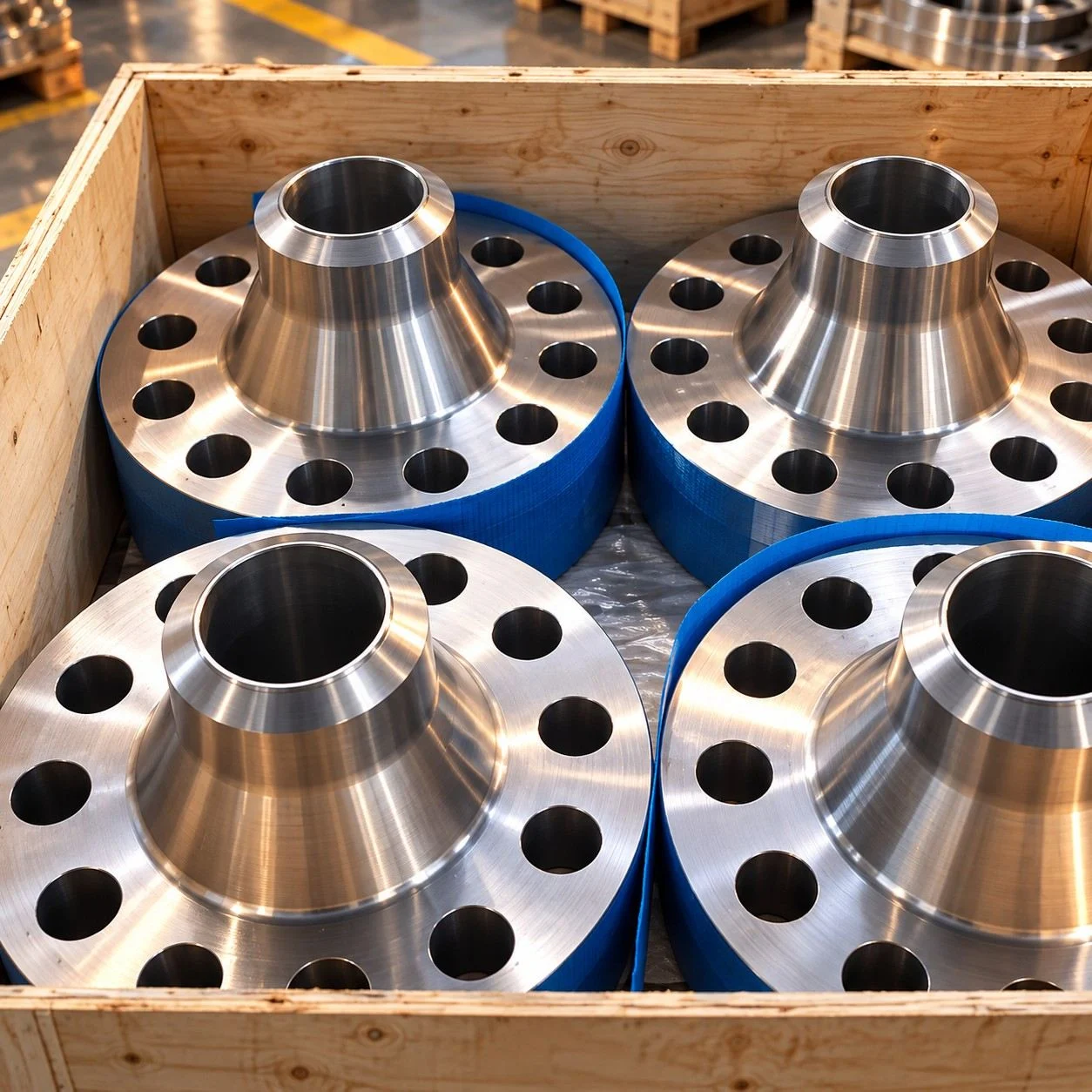
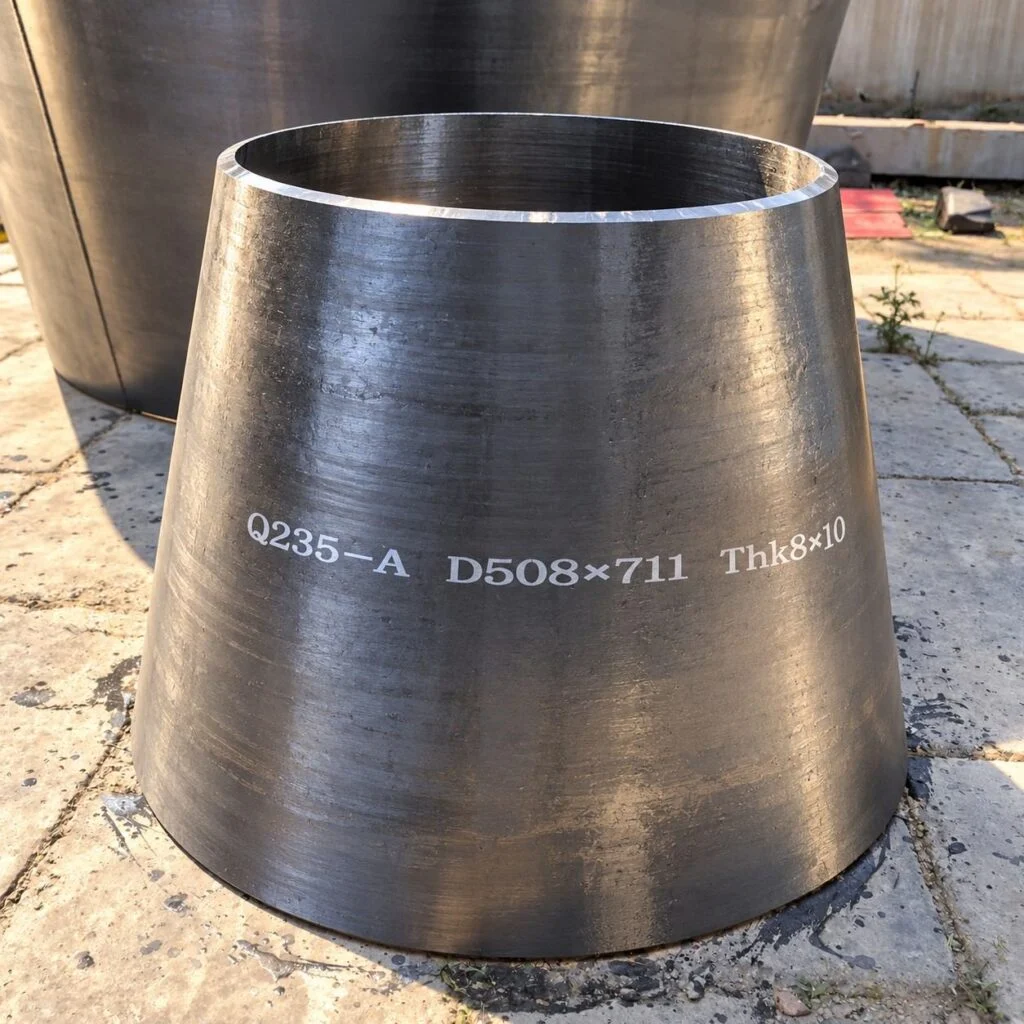
The featured flange image is illustrative and does not show the documented evaporation chambers.
Problem: desalination case study
Outokumpu’s account describes Fisia Italimpianti extending three multi-stage flash desalination plants. Their evaporation chambers used Forta DX 2205 in more corrosive sections and Forta LDX 2101 in less corrosive sections. The supplier reports delivery of 4,000 tonnes of hot-rolled plate, much of it LDX 2101. [1]
The report describes a solution based on different materials in different zones. It does not provide the chemistry, temperature or design calculation for each chamber. Consequently, the desalination case study public account cannot be used as a grade-selection table for an unrelated seawater line. Our suggested starting document is a service map.
For desalination case study, give each component an identifier and list its normal conditions, credible abnormal conditions, cleaning exposure and required life-cycle assumptions. Flag where process chemistry varies. Ask the responsible materials engineer to approve the map before the purchasing team requests alternative grades.
Approach: define evidence and acceptance
To apply this desalination case study to purchasing decisions, start with a component-by-component service map. Identify the actual location, product form, exposure and accepted material requirement. Our proposed method prevents the phrase duplex stainless steel from becoming a substitute for a complete purchase specification. Record process-side and external conditions separately.
A component can face different environments on its two sides. For desalination case study, ask the engineering team which condition governs the material review and where its accepted assumptions are documented. Do not infer those answers from the plant’s general description as a desalination facility. The desalination case study concerns plate for evaporation equipment.
Make that product-form boundary explicit when discussing fittings or flanges. A supplied plate grade and quantity do not establish qualification of a forged component, a different fabrication method or a component with a different duty. Build a material schedule with one row per approved item.
Include the exact designation, product requirement, drawing revision and document request. Identify the authority that can approve an alternative. This is an editorial planning tool; the source does not publish a complete procurement schedule for the original project. For desalination case study, ask every bidder to describe deviations in a separate list.
An offer may propose a different grade, manufacturing route, dimension or inspection scope. The desalination case study encourages asking why that change is suitable before comparing its price. Procurement should not let a shorter delivery date become implicit technical approval. A hypothetical alternative illustrates the issue.
Suppose a bidder offers a familiar stainless family name without the specified designation. Request clarification and an engineering disposition. Do not accept the substitution because both materials are called stainless. This scenario explains the decision process and is not a reported project event.
For traceability, agree how finished components will be linked to accepted material records. Identify the marking method, document reference and handling of split lots. Request a sample document package if the arrangement is unfamiliar. A certificate becomes useful when its identity can be connected to the delivered item.
The desalination case study also invites scrutiny of transitions between approved material zones. For desalination case study, ask who specifies each mating connection and how the interface appears on the drawing. Keep geometry, material and assembly approval in separate fields so an accepted change in one field does not silently alter the others.
Define fabrication evidence before manufacture begins. Ask which processes, procedures and inspection records the project actually requires. The responsible engineer must determine the technical requirements. Our recommendation is about timing and traceability: a document requested only after fabrication may be impossible to reconstruct faithfully.
For desalination case study, plan receiving checks around the approved order. Compare delivered identifiers, quantities and accessible dimensions with the schedule. Record discrepancies without changing the approved requirement to match the delivery. The desalination case study is useful because it directs attention to identifiable product scope rather than a generic material claim.
Keep preservation and contamination controls within the agreed handling plan. For desalination case study, ask who approves cleaning, end protection and storage arrangements for the selected product. Do not introduce an improvised chemical treatment from a general article. The actual method must suit the accepted material, surface condition and intended application.
When evaluating life-cycle options, separate known prices from assumed future costs. List installation interfaces, inspection requirements and maintenance assumptions. The desalination case study does not provide comparable operating-cost data for alternative grades. A buyer can still make a useful comparison by exposing the information needed for an engineering decision.
Worldstainless discusses stainless applications in water systems, while ASME’s public process-piping description explains a broader engineering scope. Use those resources to develop informed questions. Neither source, nor this article, determines the material or thickness of a particular component without the actual design requirements.
Finally, prepare a handover index that connects every accepted item to its drawing, material record and inspection evidence. Mark outstanding documents explicitly. This gives the operator an auditable starting point and avoids treating the presence of a large folder as proof that the required records are complete.
Solution: connect specifications to delivery
The supplier says duplex construction allowed thinner plate and describes benefits for material use, welding and handling. [1] Those reported benefits concern the documented chamber design. They do not establish a permitted thickness reduction for a JINYI component or a universal percentage weight saving.

Distinguish a family name from a purchase specification
Outokumpu’s explanation of stainless-steel families identifies duplex steels as having a ferritic-austenitic microstructure and lists process industries and desalination among their applications. [2] A family label still leaves the grade and product requirement unresolved. Our recommendation is to specify the exact material designation, applicable product standard and required inspection documents.
For pipe fittings, the accepted specification should connect the grade to the component’s product form and manufacturing route. For flanges, connect it to the drawing, dimensional standard and required material evidence. Do not approve an alternative solely because a data sheet uses the same broad steel-family name.
Keep geometry changes separate from material substitutions
If a supplier proposes a thinner wall or lighter component, ask for a separately approved design change. A stronger material description does not replace the calculation and acceptance required for the actual assembly. Compare alternatives first at equal function and documented duty; only then compare a redesigned option.
Make the desalination case study comparison traceable. Label the original option and the proposed alternative, list every changed assumption, and identify who can authorise the change. This prevents a cost-reduction proposal from entering production as an undocumented material substitution.
Define the transition between material zones
Where two material specifications meet, we suggest a dedicated interface drawing and approval entry. Identify the mating grades, connection method, applicable fabrication procedure and required examination. For desalination case study, ask the project engineer which service conditions govern the interface and whether the joining arrangement changes any accepted design assumption.
This is a proposed review practice. The public desalination report does not disclose its complete interface qualification package. Readers should not infer the project’s welding procedures, acceptance limits or treatment requirements from its brief materials narrative.
Results: documented numbers and evidence limits
| Published item | Reported outcome | Limit of the evidence |
|---|---|---|
| Project scope | Extensions at three plants | No complete project operating dataset |
| Supply quantity | 4,000 tonnes of hot-rolled plate | Not a quantity of piping components |
| Grade arrangement | DX 2205 and LDX 2101 by exposure zone | Exact zone conditions not published |
| Design effect | Thinner plate described | No public percentage reduction |
| Commercial outcome | Affordability benefits described | No audited cost-saving amount supplied |
All project details above are from Outokumpu. [1] The measurable result available in the public account is the supplied plate scope. Claims of a specific corrosion-life increase, percentage project saving or maintenance-cost reduction would exceed the published evidence. This matters because a procurement comparison can otherwise become misleading.
One option may include more documentation, a different inspection scope or a revised geometry. Record these differences instead of placing unlike offers beside one another under a single price column.
Takeaways: five decisions for your next project

Build a material approval file a buyer can audit
| File element | Question to resolve | Suggested acceptance evidence |
|---|---|---|
| Service map | Which exposure governs this component? | Approved duty and environment description |
| Material specification | Which exact grade and product requirement apply? | Approved purchase specification |
| Traceability | Can the finished part be linked to its material record? | Agreed identification and document chain |
| Fabrication scope | Which processes and procedures are accepted? | Approved fabrication and inspection plan |
| Dimensional interface | Does the part match the mating assembly? | Approved drawing and dimensional record |
| Alternative proposal | Has each changed assumption been accepted? | Written deviation or design-change approval |
The desalination case study matrix is a recommended purchasing tool. Where ASME B31.3 is the applicable process-piping code, its official scope includes materials, design, fabrication and inspection. [3] Use the project’s adopted edition and actual specification to determine requirements; this article does not prescribe code acceptance limits.
Compare life-cycle options without false precision
We suggest asking bidders for a structured comparison of initial component price, agreed inspection cost, fabrication implications, installation interfaces and evidence needed for maintenance planning. State which quantities are known and which are assumptions. A life-cycle estimate is more useful when its uncertainty is visible than when every cell contains an unsupported number.
If material availability drives an alternative, ask the engineering team to review suitability before the delivery schedule becomes the reason for acceptance. Record lead time independently from technical approval. This allows procurement to explore options while preserving the approved component duty.
The desalination case study establishes a documented material-supply scope and a reported zoning approach. It does not supply measured energy savings, corrosion-life improvement or a controlled cost comparison. For desalination case study, use the reported tonnage as evidence of supply scale, without presenting it as a performance result for a different component.
Keep three purchasing decisions separate: suitability for the service, conformity with the product requirement and acceptance of the delivered item. Each needs its own evidence and responsible authority. A favourable answer to one does not automatically answer the other two. For another desalination case study review, ask which data would change the decision.
Missing temperature, exposure, product-form or fabrication information should be listed as an unresolved input. That produces a practical follow-up request instead of a confident recommendation based on an incomplete service description. If the project accepts an alternative, retain the original requirement beside the approved change. Record its scope and limitations.
This helps future purchasing teams avoid repeating an exception outside the conditions under which it was accepted. The transferable desalination case study lesson is material selection with controlled identity and interfaces. Send a defined duty, exact specification and required records with the enquiry.
That creates a meaningful discussion with the supplier while preserving the engineering team’s authority over grade, dimensions and acceptance. For a desalination case study review, prepare an approval summary that identifies the component form and the limits of the published supply evidence.
Distinguish the material producer’s reported delivery from the fabricator’s acceptance evidence. Those records establish different stages in the chain to the finished component. Ask how identification is preserved when material is divided into smaller manufacturing lots. The agreed method should remain connected to the accepted material records.
A desalination case study should also identify which service data remain unavailable. That prevents a reader from treating a useful example as a complete design basis. Keep dimensional approval independent from material approval. A proposed grade accepted for review does not automatically authorise a revised flange geometry or mating interface.
Include the operator in the document handover discussion. Ask which identifiers must remain accessible after installation and where the accepted records will be retained. At receiving, retain the discrepancy record and its authorised disposition. Do not overwrite the purchased requirement to make the document package match the delivery.
Record the exact product form beside the material designation. Identify the authority responsible for each accepted material deviation. Keep the component duty linked to the issued drawing. Preserve the approval conditions attached to every accepted alternative. Ask whether the delivered identifiers match the accepted records. Review missing documents before closing the technical handover package.
Keep reported supply quantities separate from claimed operating benefits. Record which assumptions would change the material selection decision.
FAQ: practical questions and answers
Can this desalination case determine the grade for a seawater flange?
No. It concerns evaporation-chamber plate and does not publish a universal selection method. A flange needs its own service conditions, material specification, design and accepted fabrication evidence.
Does duplex construction always justify a thinner component?
No thickness reduction is authorised by this article. Any geometry change must be assessed and approved for the actual design and governing specification.
What documentation makes a material alternative reviewable?
Provide the original requirement, exact proposed grade and product form, service map, changed design assumptions, fabrication scope and required inspection evidence. Identify who approves the deviation.
Does this desalination case study establish a thinner flange design?
No. The supplied plate scope does not authorise a flange thickness change. The actual design and accepted specification govern that decision.
What is the measurable result in this desalination case study?
The source reports the material supply quantities and zoning. It does not publish a measured saving or comparative corrosion lifetime.
- Worldstainless: Protection of Water : supporting official scope and technical context.
JINYI can review a new component enquiry against its published capabilities. Review the drawing-based manufacturing scope and send your material specification and required records to discuss an order-specific quotation.