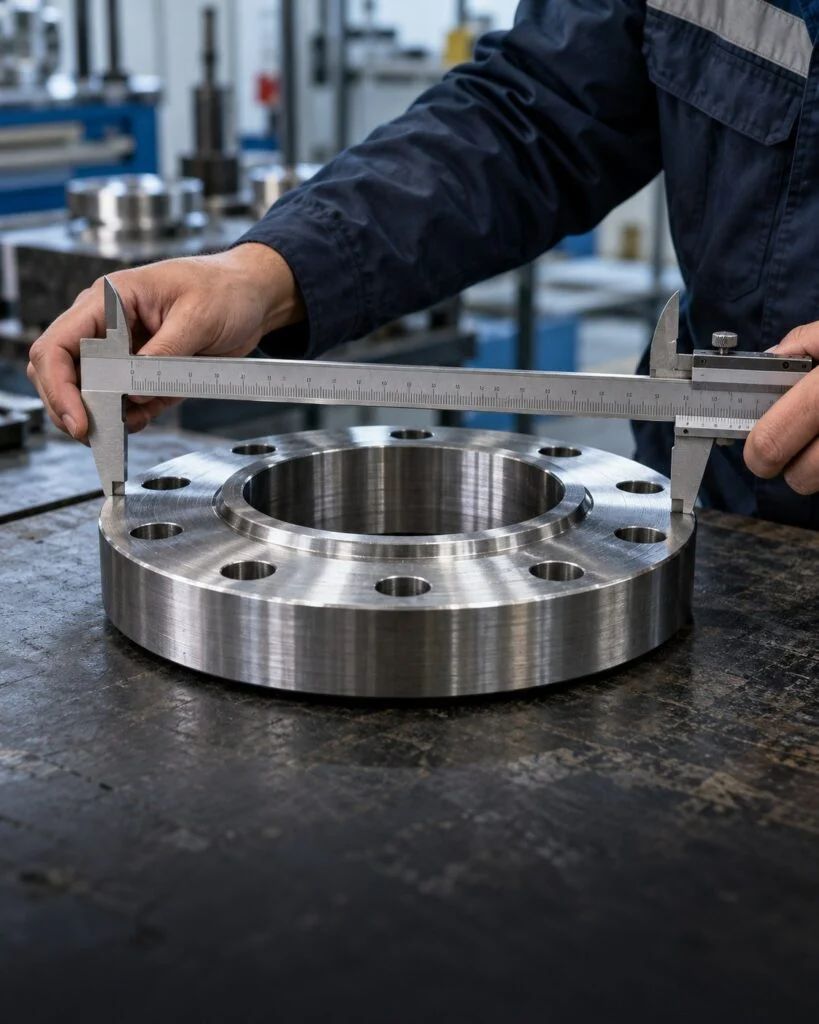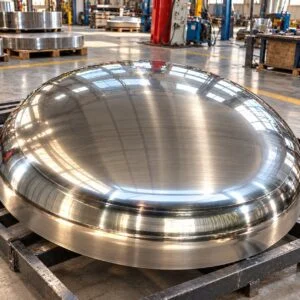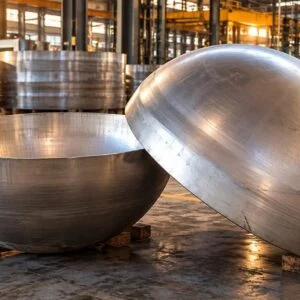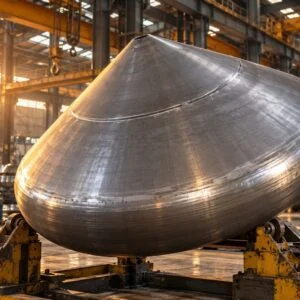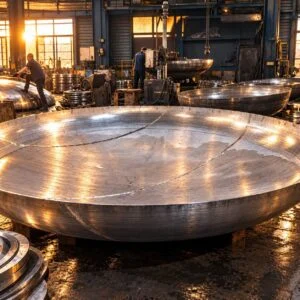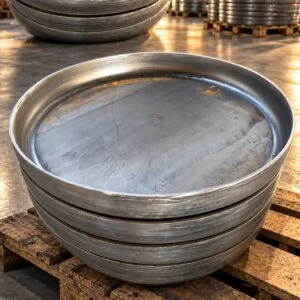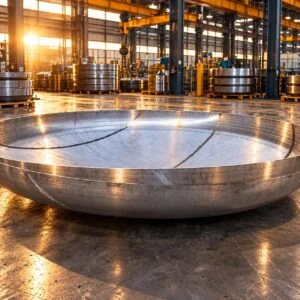
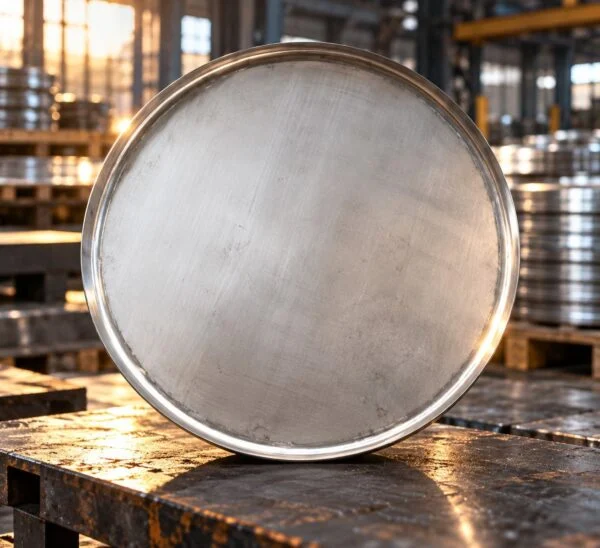
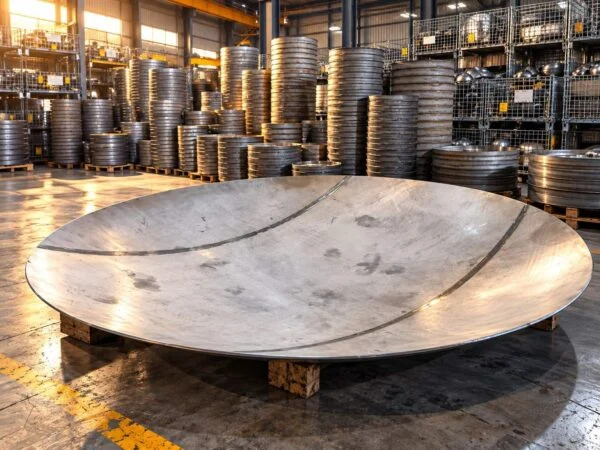
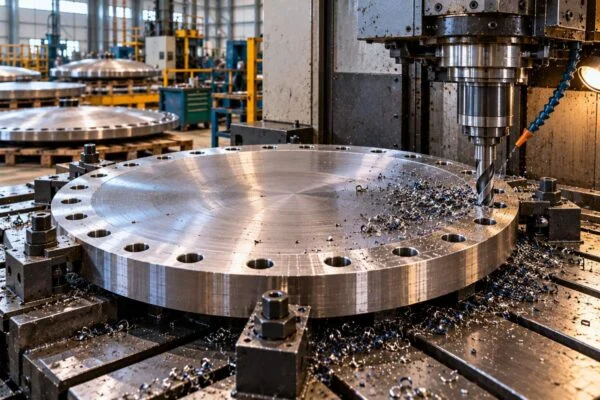
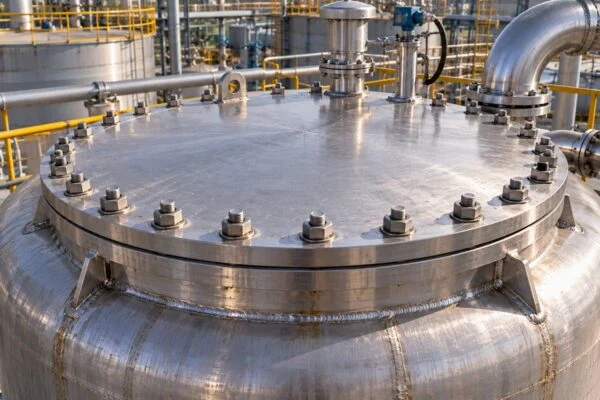
Flat Circular Tank Cover technical overview.
Flat Circular Tank Cover from JINYI is specified by its application, material and connection or drawing requirements. Review the selection schedule and enquiry requirements below to prepare a quotation for your project.
On this page
Specification basis: The schedule below distinguishes industry geometry from order-specific requirements. Final dimensions, performance and price are defined in the approved quotation and drawing. Photographs identify the product family.
What is a flat circular tank cover?
A flat circular tank cover closes a circular opening using a flat plate profile and a specified attachment or sealing detail. It differs from a formed dished head and from a removable bolted manway assembly.
Key dimensions and installation fit
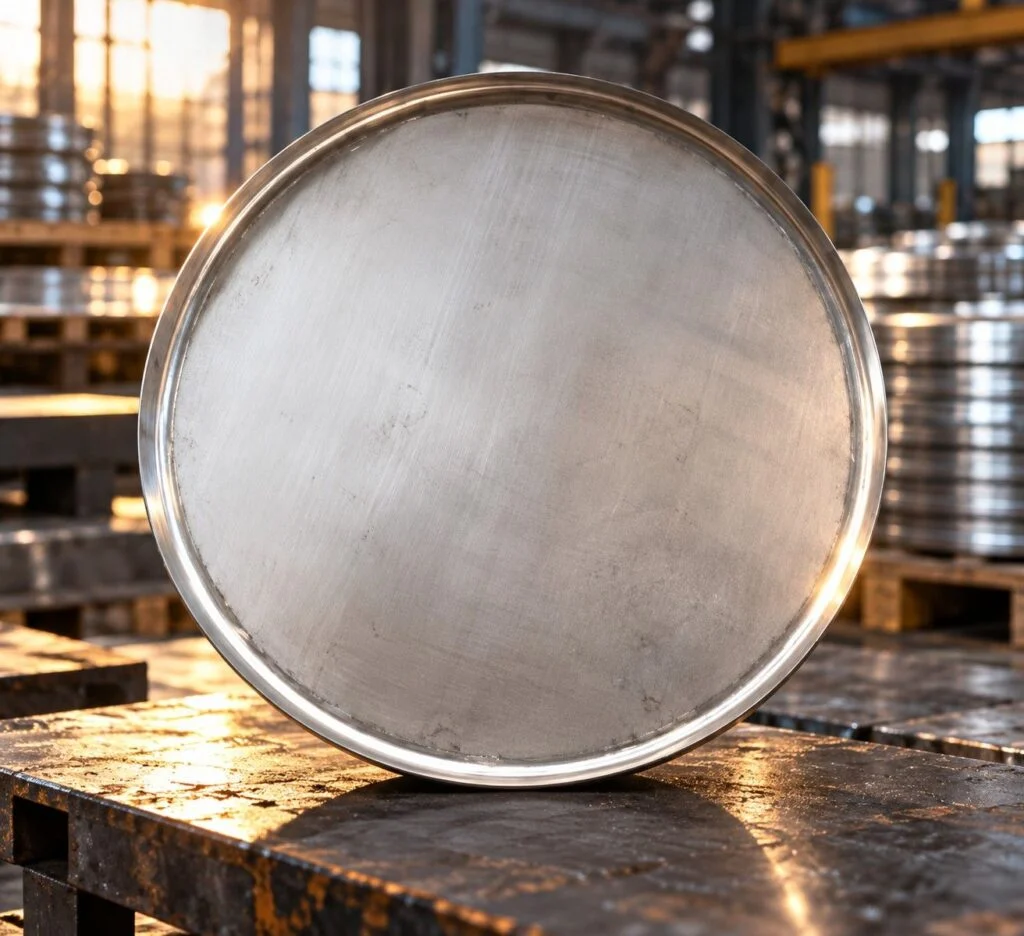
A flat circular cover is defined by its span, seating, sealing and fastening arrangement. It must not be priced or rated as a curved tank head merely because the outer diameter is the same. Thickness and bolting require the application design. Compare related configurations: flanged only tank head, round bolted manway.
How to specify the flat circular tank cover
Identify whether the cover is welded, bolted or otherwise retained. Provide unsupported diameter, plate thickness, opening details and the applicable load or pressure conditions. A flat plate cannot be assigned the performance of a dished head simply because its diameter matches.
State whether the vessel interface uses inside or outside diameter. Define crown shape, dish depth, straight flange, wall thickness and edge preparation independently. Vessel pressure, temperature, vacuum, corrosion allowance, forming thinning and openings affect the final design; shape dimensions alone do not give a working-pressure rating.
Technical data for the flat circular tank cover
| Shape | Flat circular plate or cover |
|---|---|
| Formed dish | None for an unformed flat cover |
| Seating and sealing | Support span, gasket and mating face to drawing |
| Fastening | Bolt pattern or welded joint to design |
| Diameter basis | State inside or outside diameter explicitly |
| Thickness | Minimum finished thickness to design; forming allowance separate |
| Material | Exact grade and supplied condition to the vessel specification |
| Edge preparation | Bevel, root face and fit-up to the joint drawing |
| Inspection | Profile, ovality, minimum wall and agreed examination |
Sizes and dimensional requirements
Use the named standard for standardized interfaces and the controlled drawing for custom dimensions. Confirm units, diameter datums, minimum finished thickness and any mating-component requirements. A catalogue dimension is not a universal tolerance, capacity or pressure rating.
Dimensions and tolerance schedule
| Individually toleranced features | Limits and datum system on the approved drawing |
|---|---|
| General tolerances | Standard, edition and class apply only when specified |
| Formed-head acceptance | Profile, ovality and minimum finished wall to vessel specification |
Individually toleranced dimensions and functional requirements take precedence over a general tolerance note. Specify the governing standard and acceptance method in the order documents; a tolerance shown by another manufacturer does not establish JINYI manufacturing capability.
Materials, inspection and documentation
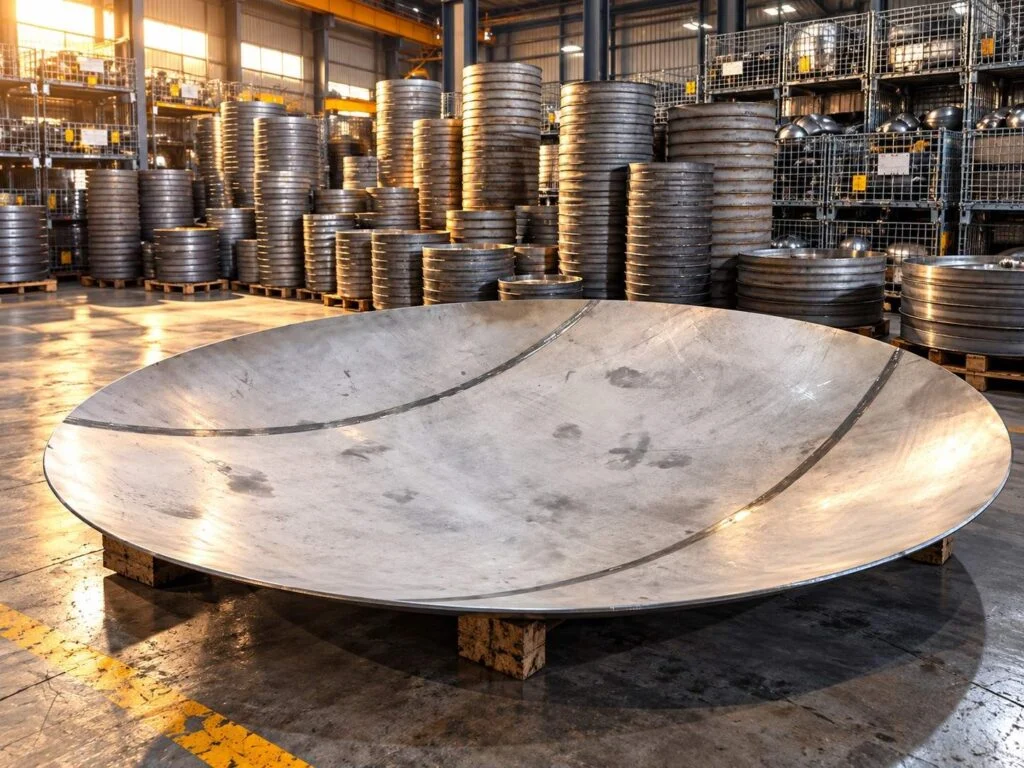
Inspect the interface diameter, profile, dish depth, straight flange and minimum finished wall thickness against the vessel drawing. Check openings and edge preparation separately. Specify material traceability, forming records and examination where required. Keep the design code and drawing revision with the ordered component.
State the exact material designation and supplied condition, the controlled drawing revision and the required inspection reports before ordering. Separate material certification from dimensional checks and functional or pressure testing. Agree the acceptance limits for the ordered component and identify any additional witnessing, marking or packing requirements. Use technical help to prepare the drawing, material and inspection questions for review. Use the custom manufacturing and OEM guidance to define the drawing, material and inspection scope.
Installation and handling guidance
Check the cover support, gasket land or weld preparation as applicable. Verify fastener positions and access before assembly. The attachment detail determines how the load passes into the surrounding shell, flange or support ring.
Where the flat circular tank cover is used
- Tank fabrication. Drawing-defined ends and covers matched to the shell interface.
- Vessel manufacture. Formed components selected through the complete vessel design.
- Equipment repairs. Replacement geometry, openings and edge details checked against the existing assembly.
How to order a flat circular tank cover
Send the required configuration, material, quantity, destination and controlled drawing to JINYI. Identify changed dimensions, mating components, operating conditions and inspection scope. For a repeat order, include the previous approved revision and state any changes. The final quotation defines the supplied geometry, documentation, price and delivery terms.
Quantity prices and order preparation
| 1–9 pcs | US$125.00 / piece |
|---|---|
| 10–49 pcs | US$125.00 / piece |
| 50+ pcs | US$125.00 / piece |
Indicative budget pricing selected from public supplier listings. Selected upper amount from the US$25–125 flat-head family listing. Cover span, seating, bolt pattern and thickness require a drawing-specific quotation. Linmei carbon-steel flat-head catalogue. Final JINYI pricing depends on the confirmed specification, quantity, inspection and delivery scope. Quantity-specific terms are confirmed with the final quotation.
Engineering and pricing references
Slawinski formed flat-bottom geometry. These sources explain the named product geometry or selection method. Their certifications, rated capacities and manufacturing capabilities belong to the named organizations.
Other JINYI products worth comparing
Review the tank manhole covers catalog for adjoining components, connection choices and alternative product forms.
Request a flat circular tank cover quotation from JINYI with the drawing, material and quantity required for your project.
Flat Circular Tank Cover selection and quotation checklist
The flat circular plate has no dished profile. Its use as a closure depends on the complete design, fixing and load conditions; geometric mass alone does not establish allowable pressure. Use the photographed product form to identify the arrangement, then use the controlled drawing to define what will be supplied. Similar-looking components can have different end details, load paths or maintenance requirements.
Flat Circular Tank Cover dimensions and tolerances
The first comparison for this flat circular tank cover is cover thickness and edge preparation. Mark the dimensions that control mating, alignment and installation space on the enquiry drawing. Give units for every value and identify the datum from which it is measured. If a dimension is critical, specify its individual tolerance and measurement method rather than relying on a general tolerance note.
A flat circular cover is defined by its span, seating, sealing and fastening arrangement. It must not be priced or rated as a curved tank head merely because the outer diameter is the same. Thickness and bolting require the application design. Review the selection schedule together with the final drawing and inspection requirements.
Prepare the material and interface information
For a flat circular tank cover enquiry, identify the required material designation and supplied condition. Describe the mating components, attachment method and environment. Include the operating temperature and any relevant pressure, movement or structural load. These inputs should describe the actual installation, including changes between normal operation, start-up and maintenance where applicable.
Specify coatings, surface finish and marking separately from the base material. If traceability is needed, identify the record required and how it must correspond to the delivered component. Agree whether inspection covers dimensions, material documentation, welds or functional testing; these are different checks with different acceptance criteria.
Custom flat circular tank cover quotation
Attach the latest drawing revision, required quantity and delivery destination when contacting JINYI. Highlight departures from the illustrated arrangement, including changed dimensions, connections, finish and packing. For repeat orders, reference the approved configuration and list changes explicitly so an earlier drawing is not assumed to remain current.
Compare quotations using the same geometry, grade, supplied condition, unit of supply and inspection scope. A piece, a segment and a complete assembly can represent different quantities. Confirm quantity discounts and delivery terms with the final quotation.
Compare related component arrangements
Evaluate this tank cover by its actual cover thickness and edge preparation and the required steel disc arrangement. The photographs below show separate JINYI products for comparison. They are linked to their own technical pages and are not additional gallery views of this flat circular tank cover.
| Photo | Related product | Selection detail |
|---|---|---|
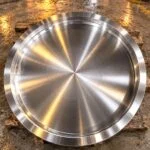 | Solid Disc Blank | Disc thickness and stock allowance. Compare this separate product when the drawing requires its particular arrangement. |
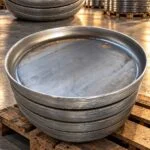 | Flanged Only Tank Head | Flat crown and flange geometry. Compare this separate product when the drawing requires its particular arrangement. |
 | Shallow Dished Tank Head | Shallow profile and crown radius. Compare this separate product when the drawing requires its particular arrangement. |
Questions to resolve before ordering
Which dimensions need checking first?
Start with cover thickness and edge preparation and the mating or mounting detail. Check nominal designations against measured dimensions, then review the installation envelope. Photographs help identify the form; the drawing provides the dimensional basis for acceptance.
What should the quotation include?
A flat circular tank cover quotation should identify the configuration, drawing revision, material, quantity, price basis and agreed inspection records. Keep these details together with the approved order so receiving inspection can compare the delivered product with the specified component.
Independent terminology reference
DVAI tank head profile families provides an independent reference for component terminology. Use the specified standard and edition where required by the project. This link does not establish JINYI certification, product approval or interchangeability with another manufacturer.
- Spec
- Defined configuration
- Grade
- Material requirement
- US$125.00
- Indicative unit price
- 3
- Quantity bands
- Product arrangement — Flat circular cover
- Engineering selection — A flat circular cover is defined by its span, seating, sealing and fastening arrangement. It must not be priced or rated as a curved tank head merely because the outer diameter is the same. Thickness and bolting require the application design.
- Quotation scope — Material, drawing revision, quantity, inspection and delivery terms confirmed together
At a glance
- Product form
- Flat circular cover
- Shape
- Flat circular plate or cover
- Formed dish
- None for an unformed flat cover
- Seating and sealing
- Support span, gasket and mating face to drawing
- Pricing
- Indicative USD pricing
| Shape | Flat circular plate or cover |
|---|---|
| Formed dish | None for an unformed flat cover |
| Seating and sealing | Support span, gasket and mating face to drawing |
| Fastening | Bolt pattern or welded joint to design |
| Diameter basis | State inside or outside diameter explicitly |
| Thickness | Minimum finished thickness to design; forming allowance separate |
| Material | Exact grade and supplied condition to the vessel specification |
| Edge preparation | Bevel, root face and fit-up to the joint drawing |
| Inspection | Profile, ovality, minimum wall and agreed examination |
| Individually toleranced features | Limits and datum system on the approved drawing |
|---|---|
| General tolerances | Standard, edition and class apply only when specified |
| Formed-head acceptance | Profile, ovality and minimum finished wall to vessel specification |