

Piping prefabrication means preparing identifiable pipe assemblies before their final installation. This piping prefabrication case study examines how a documented pump-station project combined design coordination with off-site assembly. The useful lesson for a buyer is to purchase an installation-ready information package alongside the components, rather than assume that factory assembly alone guarantees a shorter schedule.
Evidence note: This is JINYI’s analysis of a publicly documented third-party project, not a JINYI customer delivery.
Project facts and results are attributed to Victaulic.
The planning tools below are JINYI’s editorial recommendations, not additional claims about the original project.
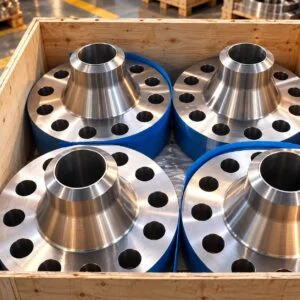
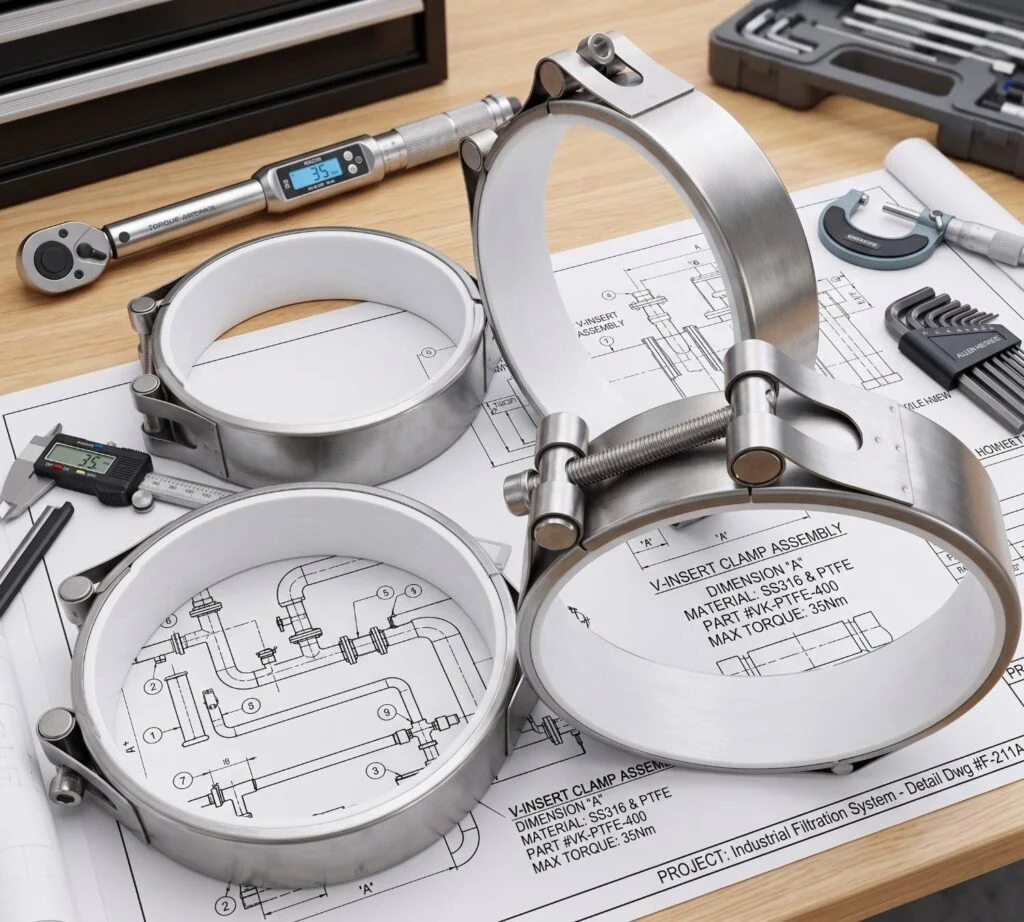
The featured image is a representative component illustration, not a photograph of this installation.
Problem: piping prefabrication
Victaulic’s report describes the Fort McMurray #468 First Nation pump station in Alberta, built in summer 2021. The above-ground stainless-steel piping connected four pumps. Earlier schedule delays made installation efficiency important. The supplier worked from the engineer’s 3D design and coordinated fabrication information with the mechanical subcontractor, Goldbar. [1]
The piping prefabrication procurement question this raises is practical: what must be settled before an assembly leaves the workshop? Our recommendation is to resolve the interfaces that a site team cannot easily correct: equipment connection coordinates, flange orientation, space for assembly tools, lifting arrangements and access for later maintenance.

Place unresolved interfaces on a separate register with an owner and a deadline. Avoid treating a piping prefabrication model as the sole acceptance record. For piping prefabrication, ask the project team which issued drawing controls fabrication, which survey establishes the installed equipment position, and how changes will be communicated.
A model that looks coordinated can still have an obsolete nozzle position. A clear revision rule is therefore part of the piping prefabrication purchasing scope.
Approach: define evidence and acceptance
For a future piping prefabrication package, start by making an interface register before asking suppliers for prices. Give each equipment nozzle, flange pair and site tie-in a separate identifier. Record the controlling dimension, the person responsible for confirming it and the consequence if it changes.
This is JINYI’s proposed planning method; the public project report does not describe this register. Distinguish surveyed dimensions from nominal drawing dimensions. A coordinate copied from an early equipment layout should remain provisional until the equipment supplier confirms it. Record that status explicitly.
A piping prefabrication drawing can otherwise appear fully released while its most important connection remains an assumption. Ask the installer to mark the piping prefabrication assembly sequence on the issued layout. Which spool must enter the room first? Which joint becomes inaccessible after the next assembly is installed? Where does a lifting attachment fit?
These questions identify installation constraints before manufacturing fixes the geometry. Create a release meeting with four outputs: confirmed interfaces, accepted fabrication documents, an agreed inspection plan and a list of intentional field adjustments. Assign one owner to each unresolved item.
Our proposed piping prefabrication workflow treats an open item as a visible decision, rather than burying it in an email chain. Consider a hypothetical pump nozzle moved after the fabrication drawing is issued. The correct response is to identify affected spools, stop only those assemblies and request a revised approval.
Do not alter a completed spool from an informal screenshot. This example illustrates change control and is not an event reported at Fort McMurray. For piping prefabrication quotations, ask bidders to separate components, workshop assembly, inspection, packing and site services. One offer may include installation support while another ends at dispatch.
Record those differences before comparing prices. A low component price cannot establish a lower installed cost when the compared boundaries differ. Use an exceptions column beside every inspection item. It should state the actual discrepancy, its physical location and the approved disposition. Avoid a blanket acceptance note that conceals unresolved measurements.
A dimensional report becomes useful when it can be matched to the assembly the site team receives. Plan packing around installation sequence. Ask whether a missing crate would interrupt the first work front or a later one. For piping prefabrication, keep associated documents accessible without requiring the installer to open every package.
This piping prefabrication recommendation aims to reduce searching and ambiguity; it does not imply a measured productivity saving. At receiving, compare the identifiers against the delivery schedule and inspect accessible connection surfaces for damage. Refer any discrepancy to the agreed authority.
A missing label and a dimensional nonconformity require different responses, so describe them separately in the receiving record. Treat preservation as a continuing responsibility. State who protects open ends after unpacking and who records storage conditions. Piping prefabrication moves assemblies between workshop, vehicle, storage area and installation location.
Each handover should identify the custodian responsible for keeping accepted interfaces protected. Review maintainability while the piping prefabrication model is still editable. Ask whether a future operator can remove a valve or inspect a connection without dismantling adjacent equipment. Record the actual space needed from the selected equipment instructions.
A visually tidy assembly may still obstruct the intended maintenance task. The purchasing brief should also identify what is excluded. Electrical work, equipment alignment, commissioning chemicals and final system testing may belong to other packages.
Our piping prefabrication approach places those exclusions beside the interface owner, so an excluded task is assigned rather than forgotten. For design and assembly context, ASME’s public descriptions distinguish process piping from pressure-boundary bolted-joint assembly. Consult the adopted code and applicable assembly instructions.
These documents support review questions; they do not approve the specific dimensions, materials or installation arrangement of a new pump station. Before authorising dispatch, ask the installer to confirm three things in writing: the current drawing is available, the receiving arrangement is ready and remaining field work is understood.
Use this as an information check. It is not a substitute for the project’s specified technical inspections or acceptance tests.
Solution: connect specifications to delivery
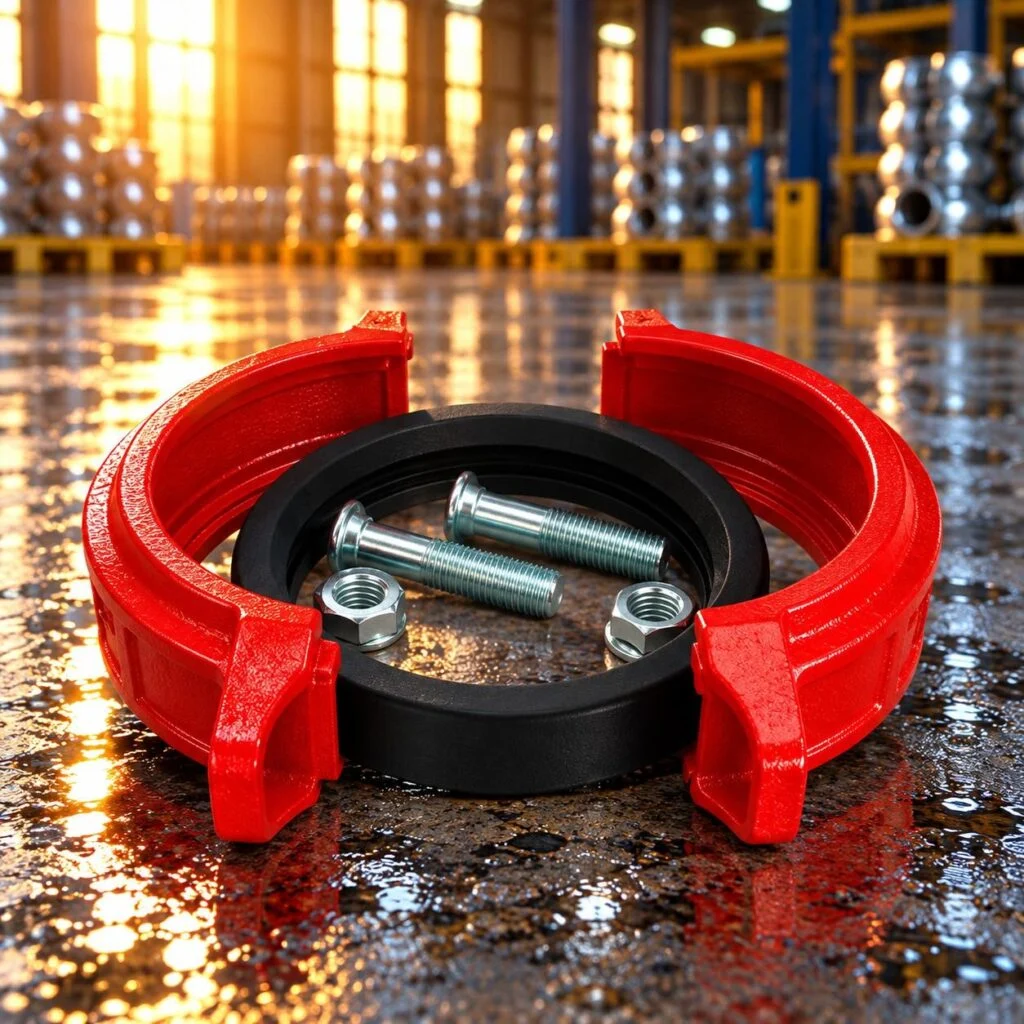
The documented solution used a coordinated fabrication package and labelled prefabricated assemblies. More than 250 couplings were assembled on over 50 spools before delivery. [1] That is the reported project method; the following release workflow is a proposed way to apply its information-management lesson to another job.
Release gate 1: define every mating interface
Prepare one interface sheet for each connection to equipment, another spool or existing pipework. Record the drawing revision, pipe outside diameter, wall requirement, material grade, connection standard and required orientation. For a flange, include the facing and drilling details; do not let a nominal size become the entire specification.
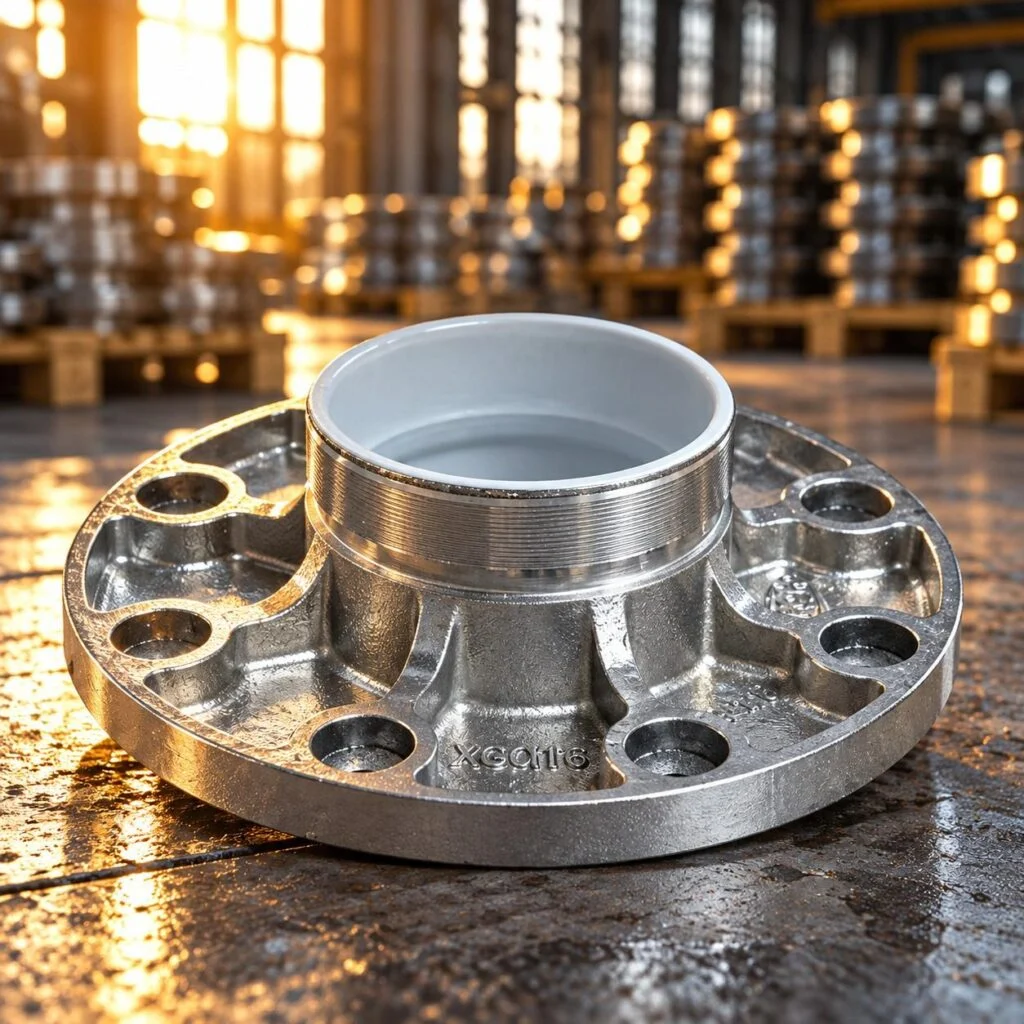
JINYI’s industrial pipe flanges page helps identify the component family, while the approved project drawing determines its final configuration. Ask an installer to review the sheet before release. Give that person a specific question: can this connection be reached, aligned and assembled using the intended tools in the available space?
For piping prefabrication, record the answer and any remaining site measurement. This is more useful than a general request to approve a drawing.
Release gate 2: make identification travel with the assembly
Use a spool identifier that appears on the drawing, inspection record, packing list and delivery label. Specify where the label is attached so it will remain readable without being placed on a sealing surface. Request a packing photograph that shows the identifier and protected ends.
These are proposed controls, not reported requirements of the original project. For grooved piping components, request the exact pipe preparation and compatible component instructions. Do not assume products from different systems are interchangeable. A drawing-based purchasing process can review dimensional interfaces; system suitability still needs the applicable manufacturer’s evidence and the project engineer’s acceptance.
Release gate 3: agree what happens at site
Separate delivery from installation readiness. Ask who unloads the assemblies, checks shipping damage, confirms identification and releases them for erection. List any intentional site-fit pieces. Decide where a missing or nonconforming part will be held and who can approve a replacement. These questions prevent an otherwise complete delivery from becoming an unplanned installation decision.
Results: documented numbers and evidence limits
| Reported item | Published result | Interpretation boundary |
|---|---|---|
| Assembly scope | Over 50 spools; over 250 couplings | Counts describe this project only |
| Site installation | Majority of piping in three days | Not the entire project duration |
| Installation crew | Two people | No total labour-hour figure supplied |
| Evidence type | Supplier project report | No independent productivity audit supplied |
All project quantities in the table come from Victaulic. [1] The report does not provide a comparable conventional-installation baseline, working hours per day or a detailed project cost breakdown. Consequently, it cannot support a defensible percentage labour saving or a promised return on investment for another site.
Do not convert crew size multiplied by elapsed days into labour hours without knowing shift length and included work. Our recommendation is to record both elapsed time and actual person-hours on a new piping prefabrication project, alongside the number of accepted connections.
Otherwise a faster installation may merely reflect more work being moved outside the measured boundary.
Takeaways: five decisions for your next project
A reusable acceptance matrix for your next order
| Purchasing decision | Evidence to request | Suggested release condition |
|---|---|---|
| Drawing authority | Issued drawing and revision register | Fabricator and installer acknowledge the same revision |
| Equipment connection | Approved interface sheet or field survey | No unresolved connection coordinate |
| Material identity | Agreed inspection documents tied to part IDs | Required records complete before dispatch |
| Assembly condition | Dimensional and visual inspection record | Exceptions accepted in writing |
| Packing | End protection and identification photographs | Labels and protected interfaces visible |
| Installation handover | Spool list and remaining site work | Installer confirms scope and access |
Treat this matrix as a starting point for the purchase order. Add the project’s actual inspection and testing requirements rather than copying a generic list. ASME B31.3 covers process-piping design, fabrication, assembly, inspection and testing; its applicability and adopted edition must be established for the particular system. [2]
Measure improvement without hiding transferred work
We recommend a baseline that includes drawing coordination, workshop assembly, transport preparation, site erection, inspection, rework and final handover. Compare equal scopes. Track first-fit acceptance as accepted assemblies divided by installed assemblies, but define “accepted” before collection starts. Keep a second measure for interfaces that required site modification.
For piping prefabrication, review exceptions as closely as successful installation. If one spool repeatedly needs adjustment, ask whether the survey, drawing release or assembly dimension is responsible before changing the supplier. Record the root cause against the spool identifier.
A component purchase then becomes a source of usable project knowledge rather than an invoice with an undocumented site correction. Piping prefabrication performance should be measured across comparable work boundaries. Track drawing-release delay, workshop rework, receiving exceptions, first-fit acceptance and field modification separately. Define when the clock starts and stops before collecting results.
Otherwise a shorter installation period can hide more work being transferred elsewhere. A useful first-fit measure counts assemblies accepted without dimensional modification, divided by assemblies installed. Define acceptance and the observation period in the project plan. Also record the cause of each modification.
An aggregate percentage cannot show whether the underlying issue was survey accuracy, drawing revision or transport damage. Do not turn the Fort McMurray figures into a quotation guarantee. The reported crew and elapsed installation time establish what the supplier observed on that project.
They do not establish shift length, total paid hours or what an alternative method would have cost. For the next piping prefabrication enquiry, submit a component schedule with controlled drawings and unresolved interfaces marked clearly. Ask the supplier to identify assumptions in its offer.
That creates a reviewable purchasing decision and gives engineering a defined point at which to accept or reject each assumption. Close the learning loop after commissioning. Compare the receiving record with site modifications and the final drawing. Retain the accepted explanation for each change.
Piping prefabrication then becomes a repeatable information process, with evidence that can improve the next specification rather than a schedule claim that cannot be reconstructed. For piping prefabrication, establish a dispatch release sheet signed by the people responsible for drawings, inspection and receiving arrangements.
List accepted exceptions beside the assembly identifiers. The site team should not discover an approved dimensional deviation only after opening a crate. Identify spare parts separately from installation quantities. Otherwise a complete delivery can appear short when maintenance stock is mistaken for missing installation material.
For piping prefabrication, ask whether packing follows installation sequence and whether the first work front can proceed without opening later packages. Keep the approved dispatch documents available to the installer. A document stored only in a purchasing inbox does not support an accessible handover.
For piping prefabrication, note which interfaces remain subject to field measurement. State how those measurements will be approved and communicated. At the closing review, compare the planned and actual work boundaries. Explain transferred work before presenting a shorter site duration as an improvement. Record who owns each outstanding document and its agreed delivery date.
Retain accepted packing photographs with the identified assembly record. Agree how the team reports damaged or missing labels.
FAQ: practical questions and answers
Does prefabrication always reduce piping installation cost?
No universal saving is established by this case. Compare complete installed scopes, including coordination, workshop work, shipping, field assembly, inspection and rework. The original report documents a successful installation sequence without a full cost comparison.
Can a 3D model replace the approved fabrication drawing?
Use the document hierarchy agreed for your project. Our recommendation is to identify the controlling revision explicitly and link every spool to it, whether the agreed authority is a drawing, model or coordinated package.
What should a buyer send for a prefabrication review?
Send the approved assembly drawing, interface dimensions, material specification, quantities, inspection requirements, packing constraints and any remaining site-fit allowance. Flag measured and assumed dimensions separately.
What distinguishes piping prefabrication from a component delivery?
An assembly package adds controlled interfaces, identification and an agreed installation boundary. Confirm those deliverables in the order rather than assume them.
Which piping prefabrication result should a buyer measure first?
Measure first-fit acceptance against a defined baseline. Retain modification causes and person-hours so changes in scope remain visible.
- ASME PCC-1: Bolted Joint Assembly : supporting official scope and technical context.
For a future component package, JINYI can review your enquiry against its published manufacturing scope. Explore custom OEM pipe fittings and flanges, then send your drawing and interface requirements for a specification discussion.