
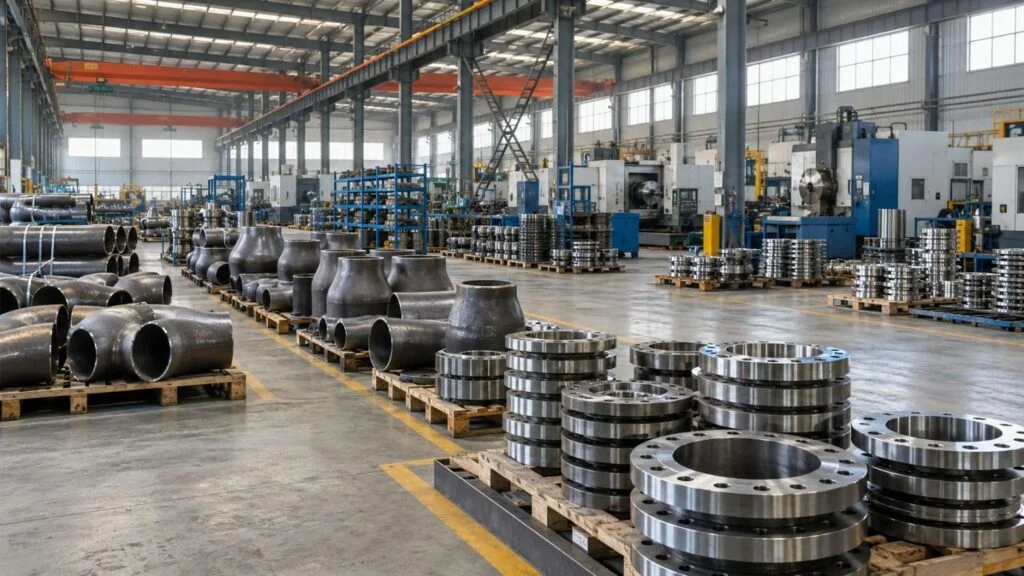
Movement · Media · Restraint
Rubber Joints & Metal Compensators
Rubber joints and metal compensators selected for media compatibility, thermal movement, vibration and a defined restraint arrangement.
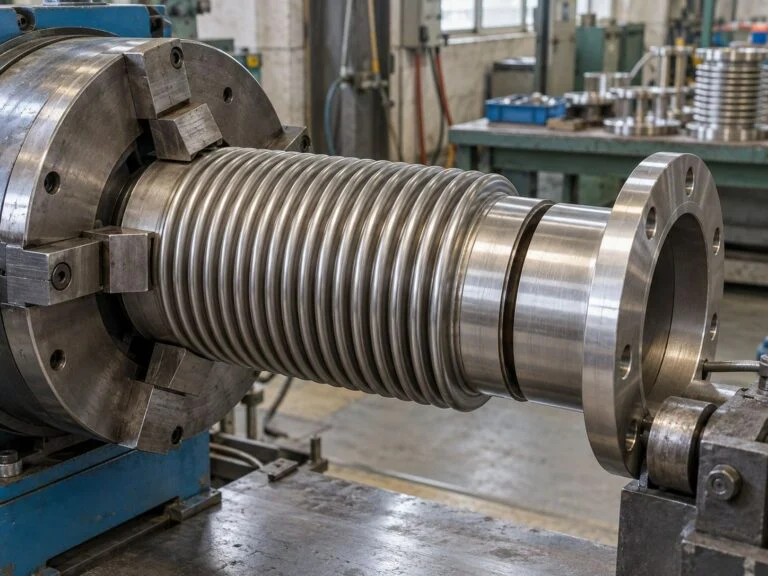
Specification basis
Confirm the applicable drawing and requirements
Inspection scope
Defined against the approved order
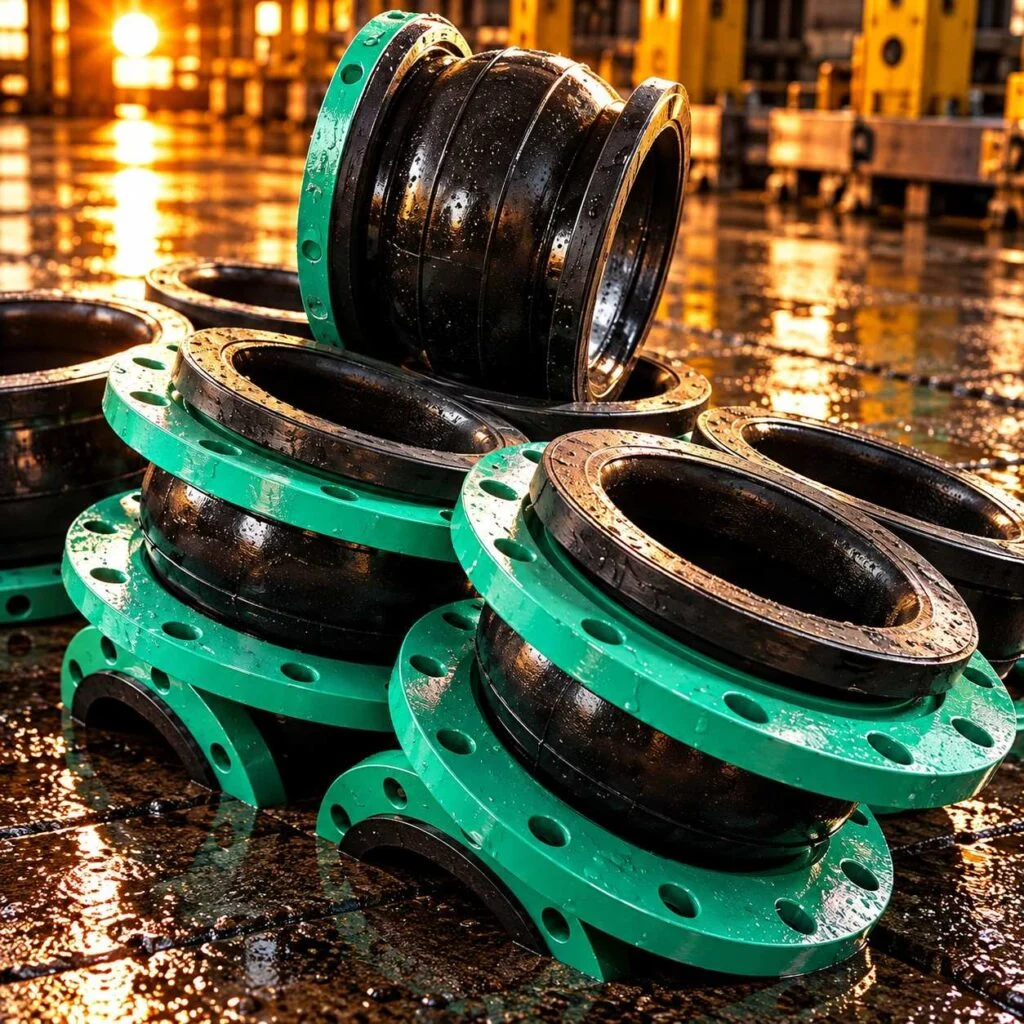 Category Rubber Joints & Metal Compensators Movement · Media · Restraint
 Axial · lateral · angular
3
Specification input
Installed face-to-face
F–F
Specification input
About this range
Select movement capacity as a system
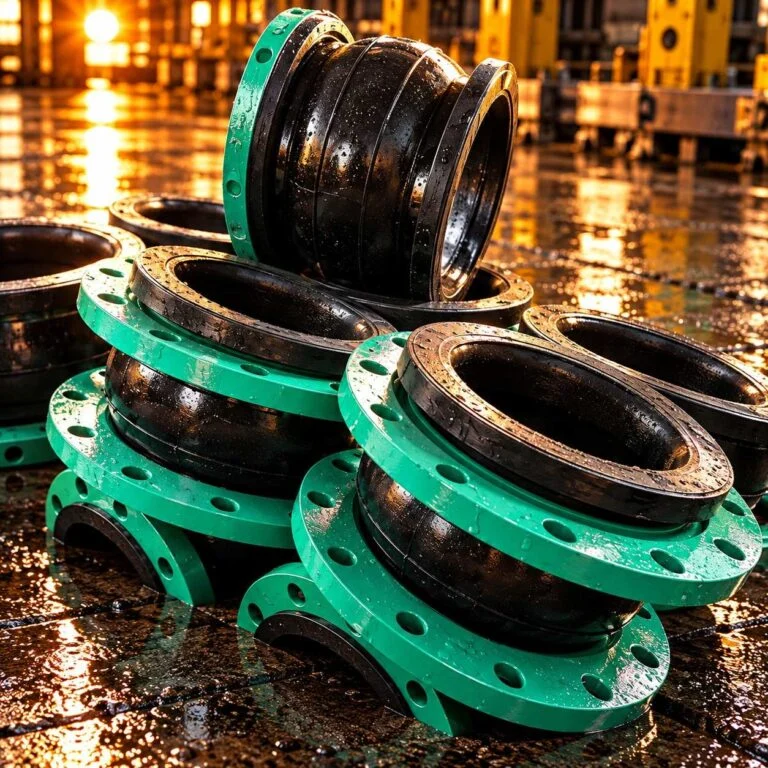
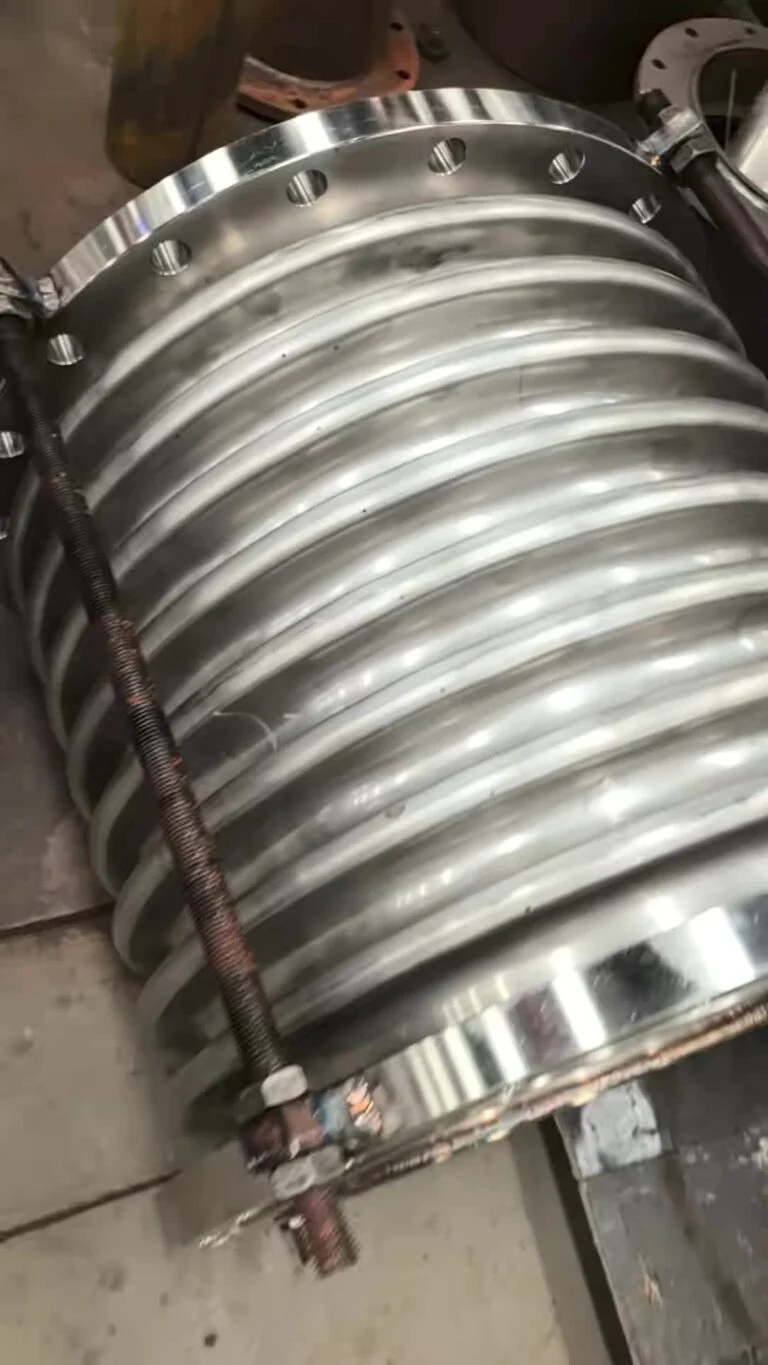
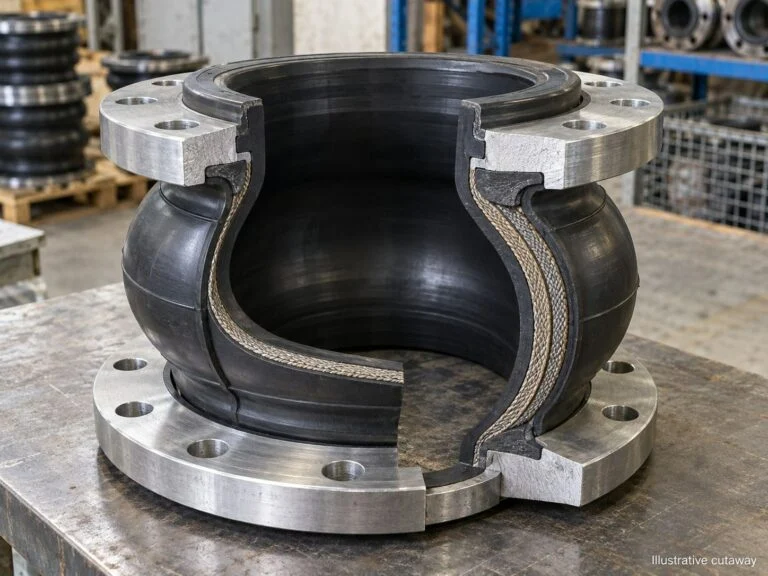
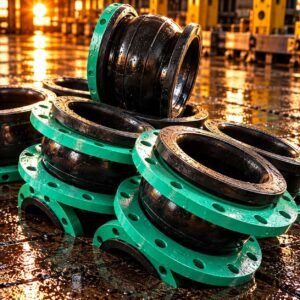
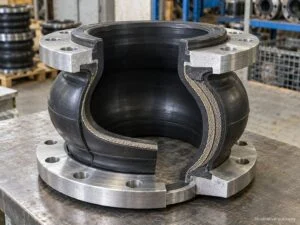
Rubber joints connect pipe flanges through an elastomer body, while metal bellows compensators use formed metallic convolutions to accommodate specified movement. JINYI currently lists a rubber expansion joint and a metal bellows expansion joint in this category. These product types solve different service problems and should not be substituted solely by diameter and face-to-face length. Selection requires the fluid, temperature, pressure, vacuum conditions, installation length, movement directions and the arrangement of anchors, guides and restraints.
- Specify axial compression and extension, lateral offset and angular movement separately. Ask the supplier to assess combined movements rather than adding catalogue maxima.
- For rubber expansion joints for pump connections, define pump vibration, fluid compatibility, installation gap and pipe support so the joint does not carry unapproved equipment loads.
- Elastomer selection is compound-specific. EPDM and nitrile have different compatibility profiles; the tube, reinforcement and external cover may use different materials.
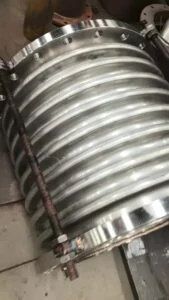
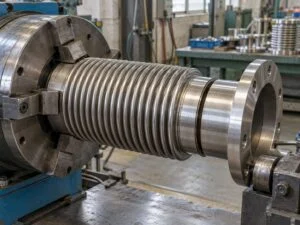
- For stainless steel bellows compensators for thermal expansion, provide the calculated movement range, temperature cycle and required fatigue life.
- Pressure thrust depends on pressure and effective bellows area. Use the selected assembly’s effective area when checking anchors and connected equipment.
- Avoid imposing torsion on metallic bellows. Tie rods, limit rods, hinges and gimbals control different forces and movements and must be specified by function.
Featured rubber joints & metal compensators
Selected rubber joints & metal compensators for project enquiries. Compare the connection, installation and specification details, then request a quotation for your required configuration.
See the full catalogueA rubber expansion joint connects specified pipe flanges through a flexible elastomer body. Specify dimensions, material and service conditions for a Jinyi quotation.
Rubber Expansion Joint
View detailsMetal bellows · movement and pressure to datasheet. Material, dimensions and commercial terms confirmed with your quotation.
Metal Bellows Expansion Joint
View detailsRubber Joints & Metal Compensators catalogue
Browse 2 products in this category. Search the range or compare the available enquiry options. Final materials, dimensions and ratings are confirmed against the selected product and your specification.
Showing 1–2 of 2 products
Metal bellows · movement and pressure to datasheet. Material, dimensions and commercial terms confirmed with your quotation.
Metal Bellows Expansion Joint
View detailsA rubber expansion joint connects specified pipe flanges through a flexible elastomer body. Specify dimensions, material and service conditions for a Jinyi quotation.
Rubber Expansion Joint
View detailsProduct capabilities
Movement, spring force and pressure thrust
Rubber expansion joints and metal bellows compensators require a coordinated piping design. Pressure thrust can be expressed as F = P × A effective, with consistent units. The effective area is a supplier design value and is not simply assumed from the nominal pipe bore. Movement also generates spring forces that load anchors and equipment nozzles. For a quoted joint, request the applicable force data, movement combination, restraint arrangement and installation instructions. Do not use a flexible element to pull badly aligned flanges into position.
- Angular movement: Rotation in degrees
- Duty pressure: Design, surge and vacuum
- Temperature: Fluid and ambient limits
- Cycles: Required operating cycles
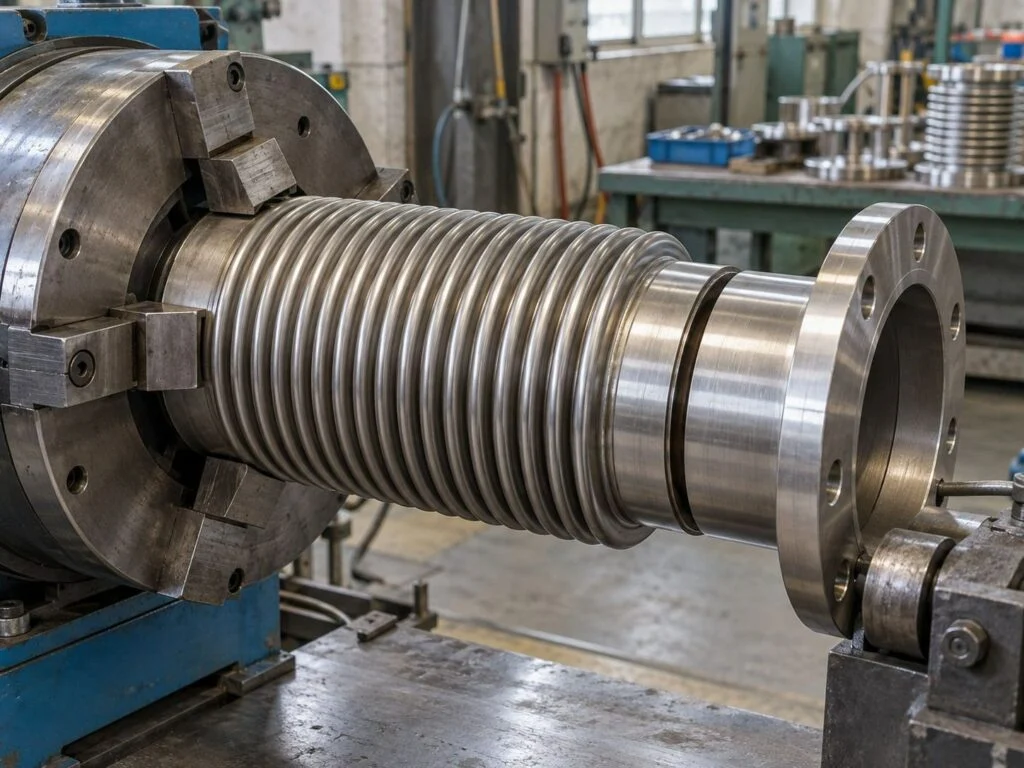
Specification
Movement modes
3
Axial · lateral · angular
Assembly length
F–F
Installed face-to-face
Four checks before specifying rubber joints
Use these checks to define the rubber joints assembly before comparing prices. Record the decision against the drawing revision and obtain confirmation of the proposed model’s limits.
- Describe service conditions Record fluid, solids, concentration, design pressure, vacuum and minimum and maximum temperature.
- Quantify the movement Provide signed axial travel, lateral offset, angular rotation and the number and nature of operating cycles.
- Review the piping arrangement Identify anchors, guides, nozzle limits, supports and the function of rods or other restraint hardware.
- Confirm installation dimensions Match flange standard, bolt pattern, facing, face-to-face length and the required cold installation position.
Dimensions and service conditions should be agreed before ordering.
Stainless steel bellows compensators for thermal expansion
For rubber joints or metal compensators, send fluid, pressure, vacuum, temperature, flange details, installation length and required movements. Include the piping layout, anchors and guides, cycle requirement and any nozzle-load limits so the joint and restraint system can be reviewed together.
- Rubber compounds Request the actual compound recommendation for the medium and cleaning process, including temperature and vacuum limitations.
- Metallic bellows Identify bellows alloy, end connections, design movements, cycle requirement and any corrosion or erosion exposure.
- Liners and covers Provide flow direction, velocity and particulate loading so the need for an internal liner can be assessed.
- Restraint hardware Differentiate thrust-restraint rods from travel-limiting devices and state the allowable movement with them installed.
Send drawings and the item schedule with your enquiry.
Inspection requirements for rubber joints
Inspect the flexible element and the completed assembly against the approved specification. A pressure test does not establish fatigue life, chemical compatibility or the permissible combination of movements. Those requirements need separate documented design and material checks.
Inspection checklist
Specify in the order- Connection dimensionsFace-to-face length, flange drilling and end alignment.
- Flexible elementElastomer identification or bellows material, surface condition and damage.
- Restraint assemblyRod, plate, hinge or gimbal arrangement and agreed settings.
- Design documentationMovement limits, spring forces, effective area and temperature conditions.
- Tests and handlingAgreed leak-test record, shipping restraints and installation guidance.
Order documentation
Scope to confirm- Approved drawingDimensions, revision and acceptance criteria
- Material recordSpecify traceability and document type
- Inspection reportAgree measured items and test scope
- Project approvalsConfirm any required certificates before ordering
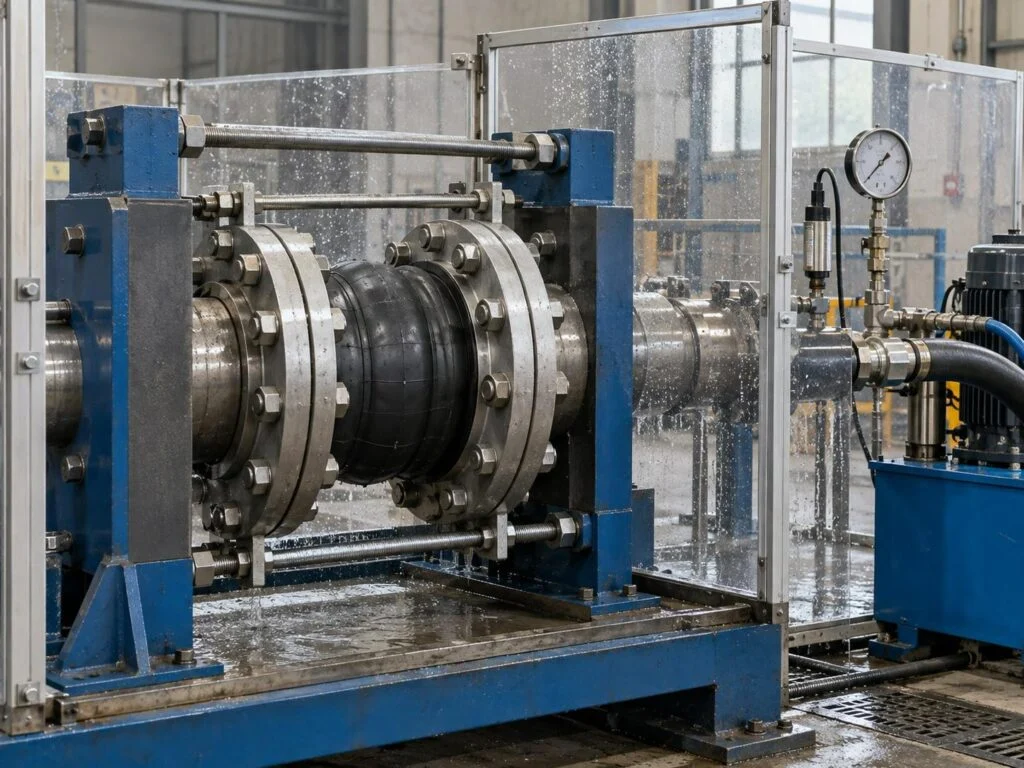
Quality
Inspection · gauging
Standards · documents
Review checkpoints
Document control
Six inspection planning steps
A purchase-order checklist- 1
Drawing review
Confirm the specification, revision and the selected rubber joints configuration.
- 2
Connection dimensions
Face-to-face length, flange drilling and end alignment.
- 3
Flexible element
Elastomer identification or bellows material, surface condition and damage.
- 4
Restraint assembly
Rod, plate, hinge or gimbal arrangement and agreed settings.
- 5
Design documentation
Movement limits, spring forces, effective area and temperature conditions.
- 6
Tests and handling
Agreed leak-test record, shipping restraints and installation guidance.
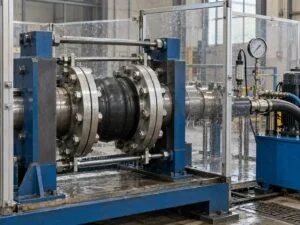
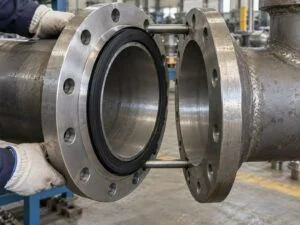
Applications and specification priorities
Common application contexts for rubber joints. Each installation needs a service-specific selection; the entries below describe engineering priorities, not customer projects or approvals.
Technical selection and common questions
EJMA bellows principles
Read the reference scope
Confirm applicability to your selected designEJMA standards scope
Read the reference scope
Confirm applicability to your selected designElastomeric-joint installation guidance
Read the reference scope
Confirm applicability to your selected design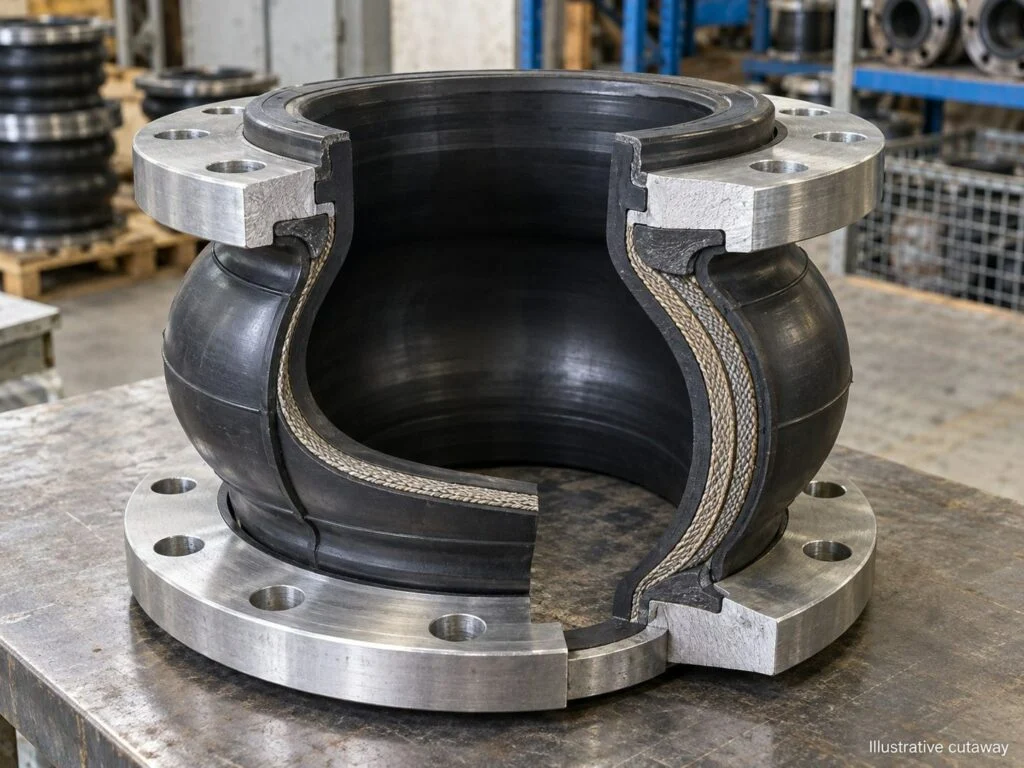
Dimension schedule
Record these fields on a drawing or item schedule. Each quotation for rubber joints should identify the proposed configuration and any departure from the specified interface.
Discuss your specification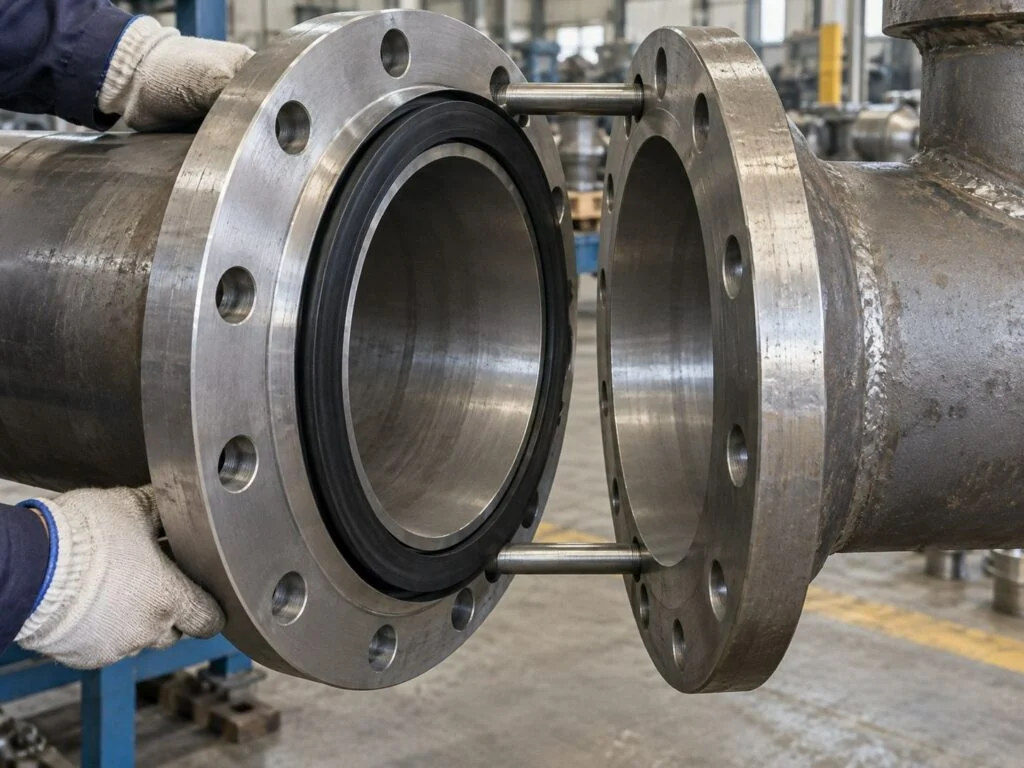
Service and installation
Include these conditions with the rubber joints enquiry. A useful comparison checks technical compliance, inspection scope and installation requirements before comparing unit price.
Discuss your specificationSelection questions
Are rubber joints suitable for every pump?
No. Check pressure, vacuum, fluid, temperature, vibration and nozzle loads for the chosen model. The joint must operate within its confirmed movement limits and installation instructions.
Can maximum movements occur together?
Do not assume so. Axial, lateral and angular demands interact. Submit the combined movement case and obtain the permissible combination for the proposed construction.
Need help with a specific drawing? Include the service conditions in your enquiry.
Discuss your specificationInstallation questions
Do control rods replace anchors?
Not automatically. The restraint arrangement must be engineered for its intended forces and movements. Obtain the model-specific instructions and have the piping designer verify the load path.
Can bellows absorb twisting?
Metallic bellows should not be used to accommodate torsion. Correct the piping arrangement and installation alignment so torque is not imposed on the flexible element.
Need help with a specific drawing? Include the service conditions in your enquiry.
Discuss your specificationRelated products for your assembly
Explore complementary products from other JINYI categories. Check each product’s dimensions and connection requirements against your assembly drawing.
See the full catalogue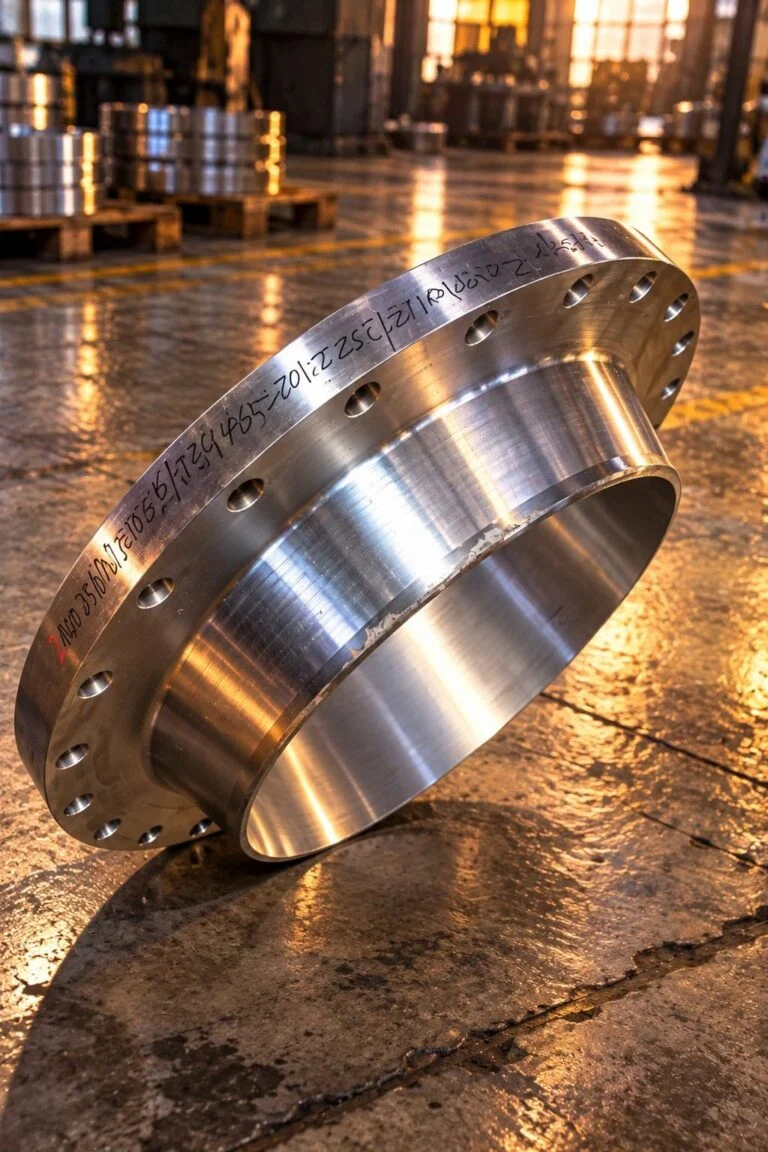
- Nominal size
- 4 in / DN100
- Pressure designation
- Class 150
- Outside diameter
- 228.6 mm
- Flange thickness
- 22.35 mm
Weld Neck Flange
View details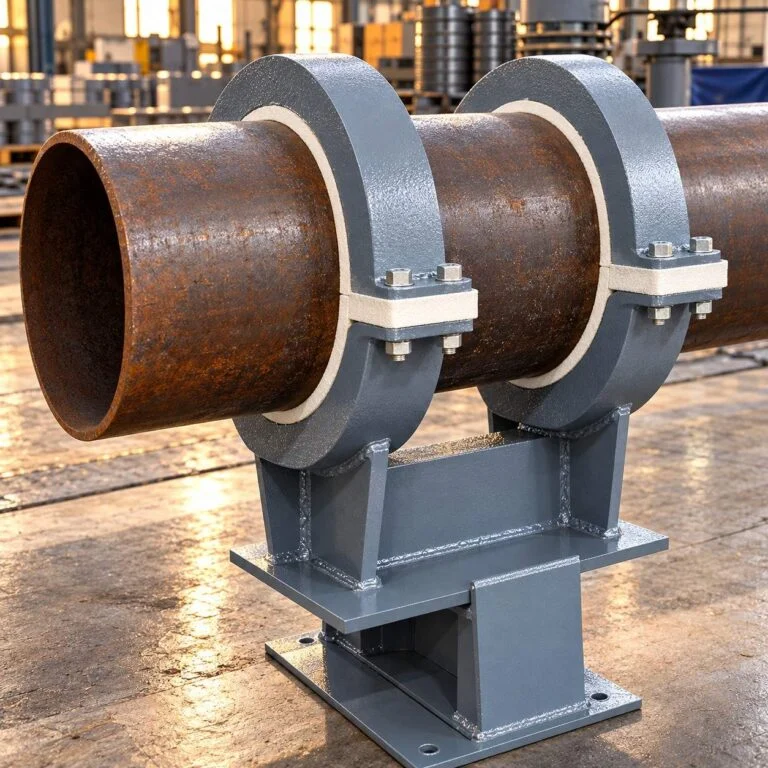
- Nominal size
- 4 in / DN100
- Pipe outside diameter
- 114.3 mm
- Support height
- 100 mm
- Overall length
- 316 mm
Clamp Pipe Shoe
View details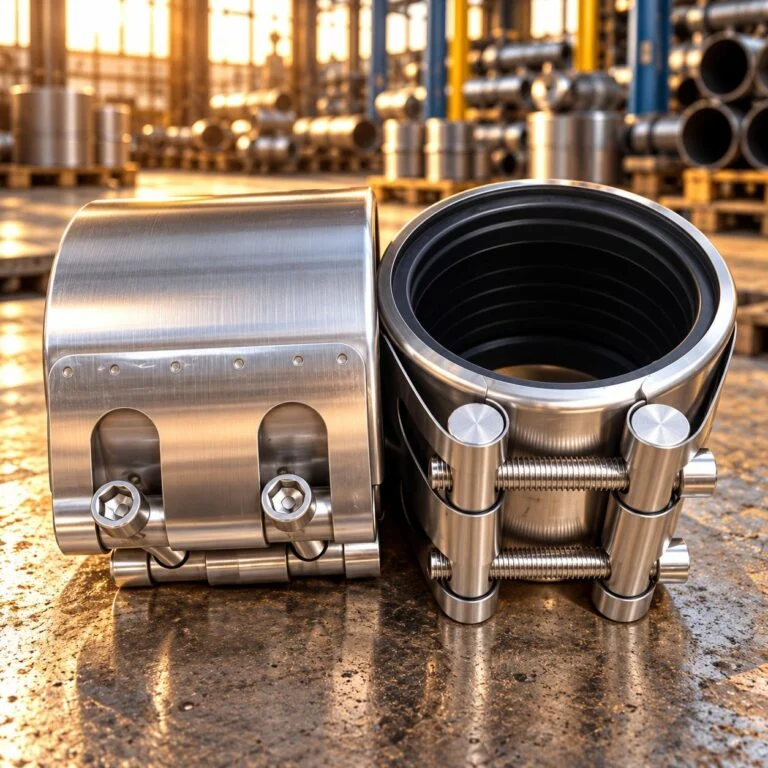
- Nominal size
- DN100
- Pipe outside diameter
- 114.3 mm
- Pressure options
- 1.0 / 1.6 / 2.5 MPa
- Housing arrangement
- 2-piece
Pipe Repair Coupling
View details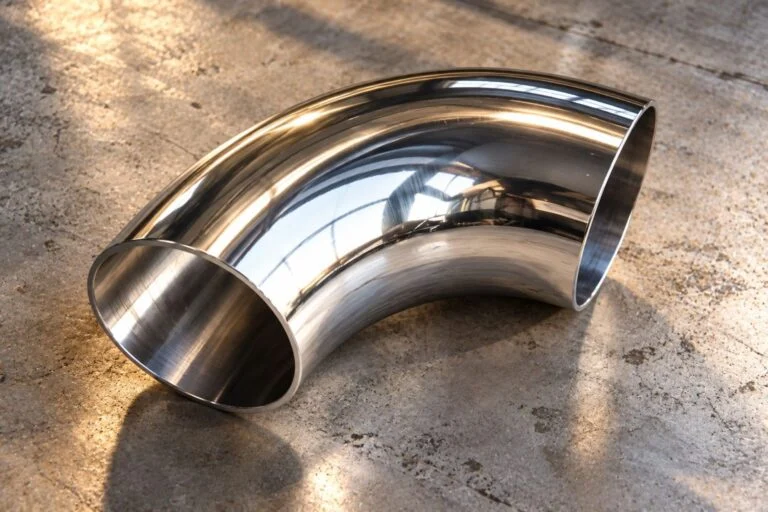
- Nominal size
- 4 in / DN100
- Pipe outside diameter
- 114.3 mm
- Bend angle
- 90°
- Centreline radius
- 152.4 mm
90 Degree Pipe Elbow
View detailsRequest a rubber joints quotation
For rubber joints or metal compensators, send fluid, pressure, vacuum, temperature, flange details, installation length and required movements. Include the piping layout, anchors and guides, cycle requirement and any nozzle-load limits so the joint and restraint system can be reviewed together.
Attach the approved drawing, item schedule and service conditions. Identify mandatory documents, inspection hold points and delivery requirements when requesting a quotation.
- Drawing-based review
- Service-specific selection
- Inspection scope agreed